Best Turf For Dogs
A vibrant lawn is the pride and joy of many Aussie homes. More than a showpiece, it’s a place for the whole family to relax, play and entertain. But when your family includes an animal or two, your beloved patch of grass can face some unique challenges to its survival.
From wear and tear caused by games of fetch to unsightly grass burn from your pet’s toilet activities, a dog can quickly undo your hopes for a healthy lawn. But don’t worry, there are steps you can take when choosing, installing and maintaining your turf that can help keep both you and your four-legged friend happily enjoying your slice of grassy paradise for years to come.
Managing a Dog-Friendly Lawn
Opting for a generally resilient lawn grass is the first and perhaps most important thing pet owners can do to create a green space compatible with an active dog. A key factor when considering the best turf for dogs in Australia is wear tolerance, especially important if you have a big breed or hyperactive pup who likes to tear around the place. Beyond that, there are some specific challenges that cannot be addressed by any of the available lawn varieties.
Before we delve into the various grass types suitable for creating a wear-resistant space, let’s take a closer look at the main issues, examining their causes and some management strategies you can use.
Playing Ruff – Damage From Foot/Paw Traffic
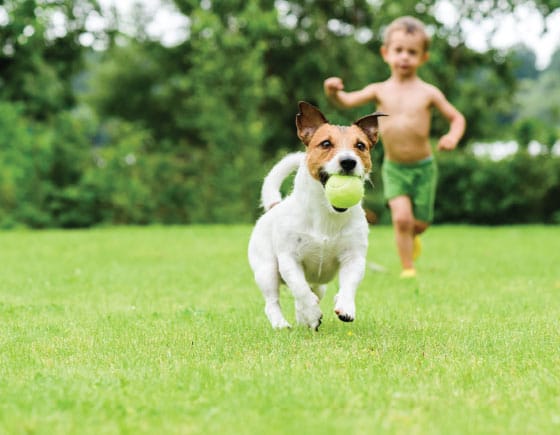
One of the biggest issues dog ‘parents’ face is good old-fashioned wear and tear. That constant running, jumping and scrambling during games of fetch, tug-of-war can be tough on even the most resilient grass types. If you thought kids could do some damage, imagine the impact of four fast-moving paws instead of two feet, not to mention if you have a large or especially strong breed like a German Shepherd or a Staffy.
Signs of this include thinning grass, bare patches and even noticeable ruts/divots in your turf. They may first show up along shady fence lines or high-traffic corridors. Effects are exacerbated if your pet runs amok after heavy rain or watering (not to mention the annoying muddy footprints inside your house).
How to manage paw traffic damage:
Short of limiting your hound to low-impact exercise on the lawn, or banning it entirely from the area, the best thing you can do is pick a high-wear variety like TifTuf Bermuda or Eureka Premium VG Kikuyu. While these are among the most robust lawn turf for dogs available, keep in mind that the fast-repairing nature of even these most resilient varieties will be limited for a lawn in shaded areas.
Compacted Soil
All that heavy foot traffic doesn’t just affect the surface vegetation; it also squashes the soil underneath. It restricts water, air and nutrients from reaching the roots, weakening your turf and slowing recovery. This hidden stress weakens the turf, making it less able to recover from damage and more prone to other problems. You might notice water pooling after rain or your lawn struggling to stay green despite your best efforts.
What you can do about canine compaction:
Compacted soil is a common problem even for pet-free lawns and can be treated effectively with aeration – essentially creating channels in the soil to increase air and water flow. Done either with a pitchfork or a specialised core aerating tool, it’s optimal to schedule it before the peak growing season as part of a larger lawn renovation regime.
The Digging Dilemma
Some dogs are notorious excavators, especially terriers bred to dig into the earth in chase of vermin. Other pets, like cats, are also known to dig the occasional hole, particularly along the edges of lawns. Whether your pooch (or pussycat) likes to bury their favourite chew toys, chase a scent, cool down, or simply burn off some energy, those holes can obviously cause significant lawn damage.
Holes in your yard? Here’s what you can do:
Unfortunately, no turf is “dig-proof,” but some grass varieties do have better self-repairing properties than others, meaning they can repair quickly, provided the hole is filled (and the dog doesn’t dig another one).
Yellow or Brown Patches? Dog Urine Might be the Culprit
You’ve put great care and effort into choosing premium instant turf, preparing your site, laying the turf and nurturing it through the establishment period. After a month, you are the proud owner of a beautiful new lawn, and it’s time to let everyone enjoy it. But what are these nasty discoloured patches popping up around the yard, usually appearing as circles up to about a foot in diameter?
If this describes your experience, we feel for you. Dogs love a good lawn, seeing it as a welcome new addition to their domain, but you know how dogs like to mark their territory. Unfortunately, dog wee is high in nitrogen and salts. While a little nitrogen is good for turf (it’s a key component of fertiliser), too much of this good thing will burn the grass. Similar damage can occur if you apply too much lawn food when fertilising.
Answering a ‘burning question’ for dog owners…
So what can be done about this irritating issue? Well, turns out urine burns are common enough to have spawned several products and strategies to stop dog urine from causing such chaos. Most can be classed as preventative measures, aimed at stopping your dog from doing their business on your lawn in the first place. Others aim to lessen the potency of their pee to mitigate the burning effect.
Preventative Measures:
- Training your dog’s toileting behaviour: Encouraging your dog to pee in designated areas like garden beds. Combined with regular walks to lessen the chance of lawn mishaps, you can avoid them going to town on your lawn. There are special sprays available for purchase that claim to mimic the pheromones in dog urine, which can be sprayed on the specific zone/s you’d like your doggy toilet/s to be.
- Using strong scents: Canines have a very keen sense of smell, and reportedly don’t like going to the toilet on surfaces that smell bad to them. Some lawn owners have reported using acidic substances like citrus oil sprays, coffee grounds or vinegar to discourage their dogs from doing number 1s on the grass. Keep in mind that too much acidity can also be bad for your soil, so test in moderation before ramping up the dose.
Remediative Measures:
- Get your dog to drink more water: The more hydrated your hound is, the more diluted their urine, meaning it won’t cause as much damage.
- Filter your dog’s drinking water: Tap water can contain damaging impurities, including ammonia, tin and other nitrates. Some owners take care to give their dog filtered water. There’s also a product called Dog Rocks, which are special pebbles that you place in their water bowl to remove these contaminants. In theory, the more pure the drinking water, the less potent the dog pee.
- Consider diet changes: Nitrogen is a natural by-product of protein digestion, so dog urine is inherently bad news for grass. Talk to your vet about whether you should experiment with lowering your pet’s protein intake to lessen the damage.
- Flush out the areas: Ultimately, if you let your dog roam free on a lawn, they’re likely to answer nature’s call sooner or later. If you happen to catch them in the act, the best thing you can do is water the area with a hose immediately. Make sure you irrigate the affected area deeply to dilute the urine, ensuring it penetrates to the roots to defuse as much damage as possible.
Choosing the Best Lawn Type for Tough Grass Your Furry Friend Will Love
Selecting the right product when it comes to lawn grass is the cornerstone of creating a backyard that both you and your pet can enjoy. Some grass varieties are simply built tougher for life with dogs, though factors like potential grass allergies for your pets or family can also influence your choice.
Generally speaking, lawns enjoying full sun will always be more resilient and better able to repair quickly from any lawn damage. Even grass types known for good shade tolerance will exhibit less wear tolerance if laid in heavily shaded areas. Let’s explore some of the best grass turf for dogs available from StrathAyr, perfect for the Victorian climate.
TifTuf Bermuda
TifTuf Bermuda has quickly become a go-to turf for challenging conditions, offering a remarkable combination of durability, good looks, and improved shade tolerance compared to other types of couch grass. It’s an excellent choice if your dog loves to play hard.
- Incredibly wear-resistant: Its dense growth and strong, deep roots create a tough surface that withstands the constant heavy foot traffic and energetic play of active dogs.
- Ability to quickly repair after damage: Recovers rapidly from trauma thanks to its vigorous growth habit and fast-spreading runners.
- Low allergy option: Typically produces little pollen, making it a better choice for family members or pets who may have sensitivities to some grass types.
Sir Walter Buffalo Turf
Sir Walter DNA-Certified Buffalo turf is a true Aussie icon, renowned for its low-maintenance and robust nature, making it a fantastic all-rounder for a dog-friendly lawn. Great underfoot (or paw) and equally comfortable in full sunlight or part shade, Sir Walter is hard to beat for Victorian homes (pets or no pets).
- High-traffic turf: Features dense coverage and robust root system to resist damage from general dog play and family activities.
- Regenerative abilities: Its spreading runners help to mend areas affected by wear, light digging, or occasional urine burns, maintaining a healthy lawn.
- Low-allergenic: Minimal seed heads and a soft leaf blade for minimal sensitivities.
Eureka Premium VG Kikuyu
If your dog is a high-energy champion of play and your backyard gets plenty of full sun, Eureka Premium VG Kikuyu is an incredibly robust contender. Its sheer toughness and rapid growth make it a prime candidate for withstanding the most energetic of pets.
- Extreme wear tolerance: Its dense, mat-forming growth creates an exceptionally tough surface that stands up to the most vigorous dog activity and high traffic.
- Excellent self-repairing: Even during winter dormancy, this Kikuyu cultivar maintains active growth, aiding year-round self-repair despite cooler temperatures and less sunlight.
Conclusion
With the right lawn turf for dogs and a few smart strategies, you don’t have to choose between a healthy lawn and a happy dog. With a bit of planning, you can absolutely create a beautiful lawn that keeps both you and your furry friends happy throughout years of outdoor enjoyment.
Want more help pet-proofing your lawn? Check out our turf selector tool or call 1800 622 455 to chat with an expert.
Best Turf For Dogs Australia FAQs
Is it OK for my dog to eat grass?
It’s perfectly normal for dogs to chew on grass, and it can sometimes aid their digestion. As most common residential varieties of natural grass are non-toxic, it’s not a cause for concern. The main consideration is ensuring any products used on your lawn, like fertilisers or pest controls, are also pet-safe and environmentally friendly.
Choosing naturally pest-resistant grass turf for dogs, such as Sir Walter DNA-Certified Buffalo, can reduce the need for chemical treatments. However, always follow the directions on the label and keep pets (and people) off the lawn for a day or two after applying any treatments.
What about artificial grass / artificial turf?
While synthetic grass might seem like a low-maintenance option, real turf for dogs often provides a better overall environment for dogs. Real grass stays cooler, offers a more natural feel that dogs love, and deals with waste more organically. Synthetic turf can get very hot in summer, may retain odours if not cleaned meticulously, and doesn’t offer the same sensory experience or sustainability benefits as a living lawn.