
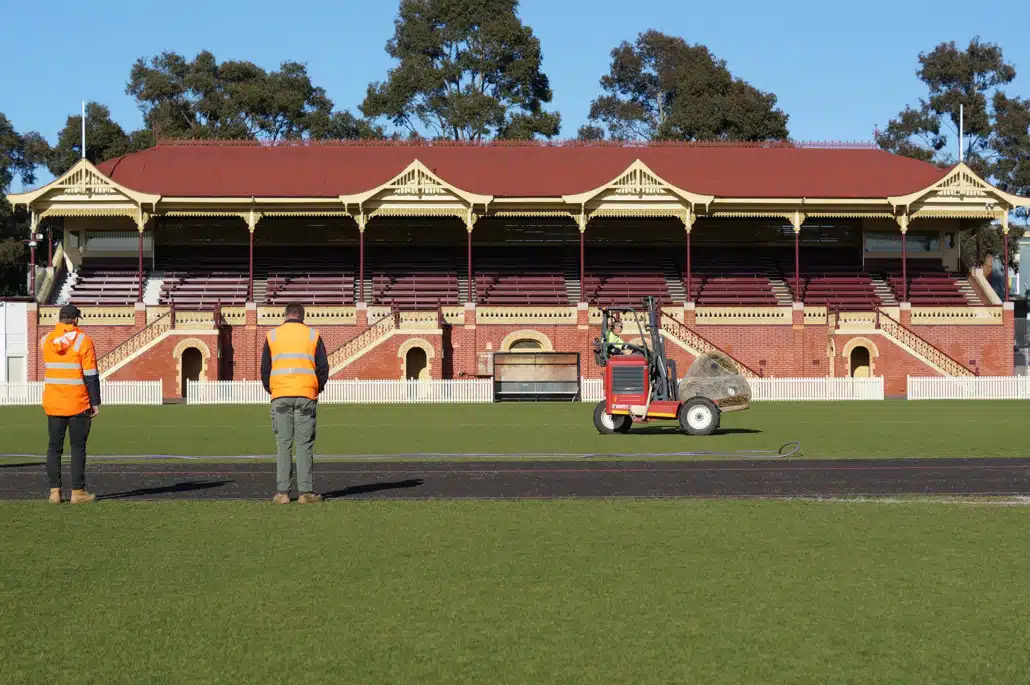
Keeping Victoria’s Sports Fields Healthy and Resilient: The Role of Soil Wetters
Maintaining high-quality sports fields in Victoria requires careful management of water, soil structure, and turf health. In Melbourne and surrounding regions, sports field managers contend with cool, wet winters, drying spring conditions, hot summers, and increasingly variable rainfall. Combined with heavy usage and, at times, water restrictions, these conditions can place significant stress on turf surfaces.
One management practice that has become increasingly valuable across professional, council, and community sports grounds is the use of soil wetters. When used correctly and timed to suit Melbourne’s seasons, soil wetters can improve water efficiency, turf performance, and surface consistency throughout the year, leaving you and your team with the turf you deserve.
What Is a Soil Wetter?
A soil wetter, also known as a wetting agent, is a surfactant designed to improve how water moves into and through the soil profile. Rather than allowing water to bead on the surface or move unevenly through the soil, soil wetters help moisture spread more uniformly through the root zone.
This is particularly beneficial on sports fields where compaction, thatch, and variable soil profiles can prevent water from reaching roots effectively.
Why Soil Wetters Matter for Sports Fields in Victoria
Sports fields in Melbourne experience high wear during winter competition seasons, followed by drying conditions through spring and summer. Over time, this cycle can lead to uneven moisture levels, dry patch formation, and declining turf resilience.
Soil wetters help by improving water infiltration into compacted or hydrophobic soils, supporting more consistent moisture availability across the playing surface. This improves turf recovery after games, reduces localised dry areas, and supports stronger root development.
In addition, by helping water reach the root zone more efficiently, soil wetters can reduce the need for frequent irrigation. This is especially important during summer when irrigation windows are restricted and evaporation rates are high. Utimately this can lead to a lower water bill and a win for the environment. Now that’s a legacy worth leaving.
How Soil Wetters Work in the Soil Profile
Soil wetters work by reducing the surface tension of water, allowing it to coat soil particles and move through the profile more freely. Once applied and watered in, the product helps overcome water repellency and improves lateral and vertical water movement.
Unlike fertilisers, soil wetters do not add nutrients. Instead, they improve the effectiveness of existing irrigation and rainfall, making them a valuable support tool within an integrated turf management program.
A Melbourne Specific Application Schedule for Sports Fields
To gain the greatest benefit from soil wetters, the timing of applications should align with Melbourne’s seasonal conditions and sports field usage patterns.
Late Winter to Early Spring (August to September)
This is an ideal time to apply a soil wetter as soils begin to dry following winter rainfall and temperatures start to rise. An early application helps prepare the soil profile for increased evapotranspiration and spring growth.
Applying soil wetter at this stage improves infiltration as irrigation systems are recommissioned and supports even moisture distribution during early turf recovery.
Late Spring (October to November)
A follow up application in late spring helps maintain soil moisture uniformity as temperatures increase and rainfall becomes less reliable. This timing is particularly important for fields transitioning from winter sports to summer usage or renovation programs. We want you to have turf that’s perfected for play, all year round.
Maintaining consistent soil moisture during spring encourages deeper root growth and helps turf withstand upcoming summer stress.
Mid Summer (January to February)
During Melbourne’s hottest period, soil wetters can play a key role in managing dry patches and reducing water stress. A summer application supports efficient irrigation by helping water penetrate quickly during short watering windows.
Care should be taken to apply during cooler parts of the day and to water it in thoroughly to maximise effectiveness and minimise evaporation.
Early Autumn (March)
An early autumn application helps restore moisture balance following summer stress and supports turf recovery ahead of winter competition seasons. This timing is especially valuable for fields undergoing repair, overseeding, or increased usage. Autumn applications can also help improve water infiltration ahead of winter rainfall, reducing surface runoff and puddling. Have your sports field in tip-top shape for that first bounce.
Best Practice Tips for Sports Field Managers
Soil wetters should always be watered in after application to ensure they move into the root zone. Application rates and intervals should follow manufacturer recommendations and be adjusted based on soil type and field conditions.
For best results, soil wetters should be used alongside regular aeration, sound irrigation scheduling, and routine soil testing. They are most effective as part of an integrated turf management approach rather than a standalone solution.
Environmental and Operational Considerations
While soil wetters support efficient water use, they should be applied thoughtfully. Over-application provides no added benefit and may increase costs unnecessarily. Field managers should also ensure products used align with local council guidelines and environmental management plans.
By improving water efficiency and turf resilience, soil wetters can help Melbourne’s sports fields remain safe, green, and playable across demanding seasons, supporting both elite competition and grassroots sport throughout Victoria. Game on.