Get a FREE Quote - Call 1800 622 455
StrathAyr
  • Home
  • Grass Types
    • HELP ME CHOOSE
    • RTF Tall Fescue Turf
    • TifTuf Hybrid Bermuda
    • Sir Walter Buffalo Turf
    • Sir Grange Zoysia
    • Eureka Premium VG Kikuyu
    • Nullarbor Couch
  • Prepare
  • Shop
  • Commercial
    • Landscape Turf
    • Sports Turf
    • Turf for Cricket
    • Turf for Football
    • Turf for Soccer
  • Blog
  • Care
  • Case Studies
  • Contact
    • Contact
    • Community Sponsorship
    • Ballarat
    • Geelong
    • Mornington Peninsula
    • Shepparton
  • Free Quote
  • Search
  • Menu Menu
  • 0Shopping Cart

The Best Lawn Grass for Backyards

Blog

The Best Lawn Grass for Backyards

Determining what is the best turf for backyard lawns is a bit like asking, “How long is a piece of string?” Every home is different. This guide walks you through the key things to consider when choosing instant turf for the perfect backyard lawn and crowns champions across multiple categories.

Factors in Choosing the Best Grass for Lawn Installations

Before jumping into specific turf types, let’s break down the critical factors that will guide your decision.

Sunlight Levels

Often, the most critical factor. Like any plant, all grass species need sunlight to grow via photosynthesis, but their requirements vary significantly between varieties. There are some that simply won’t survive on less than 6 hours of full sunlight a day. Observe how much sunlight your yard receives throughout the day, factoring in any seasonal changes, to assess how much sun your lawn will receive overall.

  • Full Sun – 6+ hours of direct sun. Ideal for most grass varieties, especially sun-loving grasses like some types of couch grass and Kikuyu.
  • Partial Shade – 3–6 hours of direct sun, or consistent filtered/dappled light. Requires shade-tolerant varieties like Buffalo grass and Zoysia.
  • Heavy Shade – Less than 3 hours of direct sun. Very challenging for most types of grass; specific shade-tolerant grasses like Sir Walter DNA Certified Buffalo are your best bet here – though even these may struggle. Keep in mind that heavily shaded lawns will grow more slowly and won’t handle wear as well.

Lawn Use – Showpiece or Playground?

How will you use your lawn? An ornamental front yard has different needs than a backyard that hosts regular games of backyard cricket or energetic pets.

  • High Traffic Areas – If your lawn needs to withstand heavy foot traffic, prioritise grass varieties known for high wear tolerance and rapid self-repair, such as TifTuf Bermuda or Eureka Premium VG Kikuyu.
  • Low Traffic / Ornamental – If foot traffic isn’t a major concern, such as in front yards or decorative areas, then you can choose whichever turf you prefer, as long as it suits the other site conditions.

Look and Feel

Beauty is in the eye of the beholder, but you might want to consider:

  • Leaf Texture – Do you prefer the finer blades of couch grass or Zoysia grass, or the lusher, wider blades of soft leaf Buffalo grass like Sir Walter?
  • Colour – Like fine wines, premium turf types have their own subtle colour variations, spanning from the yellow-tinged emerald tones of Eureka Kikuyu through to the verdant dark green colour characteristic of Sir Grange Zoysia.
  • Density – A dense turf creates a more carpet-like feel. Choices like TifTuf or Zoysia are great for this effect.

Other Considerations

  • Allergies – Some people (and pets) are sensitive to grass pollen, suffering symptoms like hayfever or itchy skin. Varieties, including Sir Walter DNA-Certified Buffalo and Sir Grange Zoysia, are known for being low-allergenic due to minimal seed head production. Kikuyu, on the other hand, can produce more, especially if not mown regularly.
  • Maintenance Level – Be realistic about how much time you’re willing to spend on lawn care. Some grasses need frequent mowing (Kikuyu, TifTuf), while others are genuinely low maintenance (Sir Walter, Sir Grange). Consider fertiliser and watering needs too.
  • Extreme weather conditions – Australia’s climates vary widely. Consider your local climate – do you get severe frosts (common in southern/alpine areas) or extended hot dry spells? It’s so important to choose the best turf for the variable Melbourne climate when the weather demands resilience for both frosts and drought.

Sir Walter is a great all-rounder who can handle extreme heat and cold. Although a warm-season grass type, it keeps its colour well during the winter. RTF Tall Fescue is a cool-season grass that maintains steady growth and evergreen colour, keeping a healthy lawn look year-round in chilly climates.

What is the Best Turf for Australian Lawns? Breaking Down Our Top Picks

Based on the factors above, here are our recommendations on the best grass for lawn use across common conditions and user profiles.

Best Overall – Sir Walter DNA-Certified Buffalo Grass

For a reliable, great-looking lawn that ticks most boxes for Australian homeowners, Sir Walter Buffalo turf is hard to beat. It blends ease of care with robust performance in as much as 70 per cent shade coverage and wide-ranging soil types. A true Aussie all-rounder, it can withstand heat and cold, drought and flooding rains – all while requiring minimal upkeep. You beauty!

Why it wins:

  • Excellent balance of shade tolerance (best in class for warm season grasses) and full sun performance
  • Good drought tolerance thanks to its deep root system
  • Good wear tolerance for typical family use
  • Great low-maintenance option (less mowing and fertilising)
  • Soft leaf feels great underfoot
  • Low-allergenic

Honourable Mention – TifTuf Bermuda offers higher wear and drought tolerance if you get at least 4 hours of full sun a day and don’t mind more regular mowing.

Best on a Budget – Eureka Premium VG Kikuyu

When toughness and value are top priorities for sunny yards, Eureka Premium VG Kikuyu delivers exceptional durability without the premium price tag. It establishes quickly, creating a dense lawn fast.

Why it wins:

  • Excellent value for money
  • Exceptional wear tolerance and rapid recovery make it ideal for very high traffic areas
  • Thrives in full sunlight and handles heavy rain well
  • Strong stem growth provides durability

Honourable Mention – TifTuf Bermuda turf is also relatively cost-effective and offers better drought tolerance, though Kikuyu repairs slightly faster.

Best for Allergy Sufferers – Sir Walter Buffalo

If allergies are a concern for your family or pets, choosing a lawn known for low pollen and seed head production is essential. Sir Walter Buffalo stands out in this category.

Why it wins:

  • Produces very few seed heads (a common allergen source)
  • Consistently recommended as a low-allergenic grass type
  • Its soft leaf is non-irritating

Honourable Mention – Sir Grange Zoysia also produces minimal seed heads and has fine, soft leaf blades that feel great underfoot.

Best Grass Type for Active Users – TifTuf Bermuda Grass

For backyards that play host to frantic footy games or dynamic doggos, you need turf that can handle the pressure. TifTuf Bermuda was bred for this, and is the ideal choice for active families in lightly shaded to full sun backyards.

Why it wins:

  • Incredibly wear-resistant with exceptional tolerance for heavy foot traffic
  • Fast-repairing nature due to vigorous runner growth
  • Maintains density under pressure
  • Extremely low water needs mean it stays strong even under drought conditions or fast-draining sandy soils
  • Can be mown super low (as short as 3mm on some golf courses’ greens), meaning homeowners can turn backyards into sports fields

Honourable Mention – Eureka Premium VG Kikuyu grass offers slightly faster repair but isn’t quite as drought-tolerant.

Best ‘Lazy Lawn’ (Low Maintenance) – Sir Walter Buffalo

Not in love with those gardening gloves and want a beautiful lawn without dedicating every weekend to it? Sir Walter Buffalo fits the bill for an easy-care yet attractive home lawn.

Why it wins:

  • Requires significantly less mowing than faster-growing grasses like Kikuyu or TifTuf
  • Lower fertiliser needs
  • Good drought tolerance suited to dry climates, meaning less frequent watering once established
  • Natural density helps suppress weeds

Honourable Mention – Sir Grange Zoysia requires even less mowing and fertiliser but needs good drainage and is slower to establish/repair.

Best For Pool Surrounds – Sir Grange Zoysia

Creating a sophisticated look around pools or in feature lawn areas requires specific characteristics. Sir Grange Zoysia offers a premium, fine-leafed aesthetic combined with practical benefits.

Why it wins:

  • Very fine, dense leaf creates a premium, carpet-like appearance
  • Good salt tolerance makes it suitable near salt-chlorinated pools
  • Low maintenance in terms of mowing/fertilising keeps it looking neat
  • Good performance in full sun to partial shade

Honourable Mention – TifTuf Bermuda also has a fine leaf and excellent wear tolerance, making it another good option, especially if faster repair is needed.

What About Cool Season Grasses? Introducing RTF Tall Fescue

While warm season grasses dominate most Australian lawns, cool season grasses like RTF Tall Fescue offer unique advantages, particularly for staying green through the cooler months. If you live in the south or an alpine area with a colder environment, it’s worth considering this option.

  • Role & Benefits – RTF Tall Fescue maintains its deep green colour through winter when warm season types show winter dormancy. It has good shade tolerance and handles cooler climates well. Its deep root system offers reasonable drought tolerance for a cool-season variety. Self-repairing rhizomes give it better wear characteristics than older fescues.
  • Considerations – It generally requires more water during hot, dry summers than drought-tolerant warm-season grass varieties. It may struggle in extreme heat compared to Buffalo grass, Bermuda grass, or Zoysia. Best suited for areas with moderate foot traffic or consistent moisture.

Making Your Choice & Next Steps

Choosing the best lawn grass involves balancing your priorities, including sun exposure, usage, maintenance preferences, desired look, and budget. Hopefully, this guide has helped clarify which turf variety might be right for your needs. Remember that proper site preparation before you lay turf is crucial for establishing a healthy lawn, regardless of the grass type you choose. Ongoing lawn care, including appropriate watering, mowing, and fertilising, will ensure your turf thrives for years to come. Read more about installing your new lawn with natural turf here.

Still unsure? Call our team to discuss your ideal lawn turf on 1800 622 455, or use our handy turf selector tool to choose the right grass for your needs.

Best Lawn Grass FAQs

I asked a relative what is the best turf and they said couch grass – is this true?

Your relative remembers correctly! For a long time, couch grass (also commonly known as Bermuda grass) was the ‘green and gold standard’ for durable Australian lawns, prized for its fine leaf and ability to handle heavy foot traffic in full sun. However, while still tough in sunny spots, traditional couch grass varieties can struggle significantly in shade, require frequent mowing to manage their stem growth and prevent spreading, and often brown off completely during winter dormancy.

Thankfully, modern turf breeding offers fantastic alternatives that often better suit Aussie backyards. Grass varieties like Sir Walter Buffalo provide excellent shade tolerance and are genuinely low-maintenance. Advanced Bermuda grass cultivars like TifTuf deliver incredible drought tolerance far beyond other grasses from the couch family. And Zoysia grass, such as Sir Grange, offers a fine-leaf look with minimal upkeep. These newer grass types generally provide a better balance of year-round performance, appearance, and easier lawn care compared to traditional couch for most home lawns.

What are the advantages of instant turf over lawn seed?

Instant turf gives you a beautiful lawn immediately, ready for light use, much faster than waiting for seeds to germinate and grow. It provides guaranteed coverage with your chosen turf variety, reducing initial weed problems and patchy results common with seeding. Enjoy a mature, healthy lawn in days, not months!

What are the best drought-tolerant varieties for full sun?

For full sun areas demanding high drought tolerance, TifTuf Bermuda is an outstanding choice, requiring significantly less water once established. Sir Grange Zoysia also boasts excellent drought resistance. While Sir Walter Buffalo and Eureka Kikuyu handle dry conditions well, TifTuf and Sir Grange Zoysia generally lead for water efficiency in sunny spots.

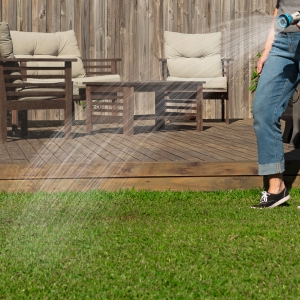
January 22, 2026/by Jack McDonald
https://strathayr.com/wp-content/uploads/2024/12/Woman-Watering-scaled.jpg 1152 2048 Jack McDonald https://strathayr.com/wp-content/uploads/2025/10/StrathAyr-Logo-300x138.png Jack McDonald2026-01-22 11:39:122026-01-22 11:39:12The Best Lawn Grass for Backyards

Choosing the Best Turf For Melbourne

Blog

Choosing the Best Turf for Melbourne

When it comes to selecting the right turf for Melbourne lawns, homeowners, landscapers, and groundskeepers need to consider more than just sunlight or the intended usage. Victoria’s distinct seasonal climate and varied regional geology present unique challenges that can rule out many common turf varieties. This guide uses a process of elimination based on key local factors to help Victorian residents identify the best instant turf for Melbourne, whether for a backyard, commercial landscape turf, or a high-traffic sports field.

Factors to Consider Upfront

Before diving into specific turf types, it’s important to understand your site conditions. While aesthetics matter, long-term success comes from matching the turf to Melbourne’s climate, soil and usage patterns. These factors are key to creating a lush lawn that not only survives but thrives in our environment. Melbourne homeowners and professionals can use these factors to refine their shortlist.

Sunlight Levels – The 1st Filter

How much direct sunlight does your potential lawn area receive daily? Site sunlight levels can be roughly categorised as follows:

  • Full sun (6+ hours) suits most grass types
  • Partial shade (3-6 hours) requires shade-tolerant options (like Buffalo grass and Zoysia turf varieties)
  • Heavy shade (under 3 hours) severely limits choices, often favouring Sir Walter Buffalo as one of the few viable options. Accurately assessing sun exposure is step one before considering other aspects.

Melbourne’s Unique Climate

The Melbourne climate is notoriously variable, and across the state, weather conditions demand resilient turf. Victoria has a range of climatic conditions, and the key factors to consider include:

  • Warm Season vs. Cool Season – Warm season grasses thrive in summer heat but often go dormant, losing colour in winter. Cool-season grasses (like Fescue grass) stay green through winter but typically need more summer water and struggle more with extreme heat or drought.
  • Frost Tolerance – Frost tolerance is vital across much of Victoria, especially in elevated regions like Ballarat, Macedon, and Daylesford, where sub-zero temperatures and occasional snowfall are common. Cool-season variety RTF Tall Fescue handles these conditions exceptionally well. Established warm-season grass varieties can go dormant through frost but usually recover well in spring. Sir Walter DNA-Certified Buffalo has great frost resistance for a warm-season grass.
  • Drought Tolerance – In drier Victorian regions (e.g., Mallee, Wimmera) or on sandy soils, high drought tolerance is essential. Highly drought-resistant turf like TifTuf Bermuda excels here, saving water during dry summers. Sir Walter Buffalo is another good performer in low-water conditions.

Your Lifestyle, Your Look

With sun, local climate, and soil addressed, consider how you’ll use your lawn and the look you prefer to further refine your choice. Busy Melbourne backyards with active kids or pets demand turf with high wear tolerance and recovery capabilities – TifTuf Bermuda and Eureka Kikuyu VG excel here – especially as wetter, softer ground in cooler months can increase lawn damage.

Quieter, ornamental lawns allow you to prioritise aesthetics – perhaps TifTuf’s neat, fine leaf blade or certain Zoysia grasses like Sir Grange suit modern Melbourne homes, while Sir Walter Buffalo’s glossy, broad leaf appearance fits established gardens. Think about your preferred leaf texture, desired vibrant green colour, and overall density to decide which of the many different grasses on the market match your style and needs.

Buffalo Grass? Couch Grass? Kikuyu Turf? What is the Best Instant Turf for Melbourne?

Now that we’ve considered the key factors influencing your choice, let’s profile the leading new turf varieties best suited to handle Melbourne conditions. Each grass type brings different strengths, making them ideal for particular priorities and situations found across Melbourne homes. Victorian-based turf suppliers are missing a trick if they don’t stock the following varieties.

Sir Walter DNA-Certified Buffalo – A Low-Maintenance Legend in Sunny or Shady Areas

A consistent favourite for Melbourne lawns, Sir Walter Buffalo (ensure it’s DNA-Certified) is the reliable all-rounder. This warm-season grass adapts incredibly well, thriving in full sun but also handling significant shade (up to 70%) better than most other grasses – ideal for established yards with trees. It copes well with Melbourne’s colder winters (entering dormancy but recovering reliably) and is highly drought-tolerant thanks to its deep root system.

Don’t let its soft, glossy exterior fool you, Sir Walter is tough, handling high foot traffic, rampaging pups and hyper competitive games of backyard footy or cricket in its stride. Its relatively low-maintenance needs and low-allergenic qualities make Sir Walter a practical, popular choice.

TifTuf Bermuda – Hard-Wearing Beauty + Unmatched Drought Tolerance

For those sunny Melbourne backyards that see plenty of action, TifTuf Bermuda is a technological leap in couch grass performance. Bred for exceptional durability, this turf variety boasts incredibly wear-tolerant qualities perfect for high-traffic areas. Its standout feature is superior drought tolerance (certified smart drop certified), requiring less water to stay green during restrictions or dry conditions. Natural weed resistance and low fertiliser needs make it a low-maintenance lawn in some respects, although its rapid growth requires frequent mowing.

While TifTuf enters winter dormancy in cooler weather, its fast-repairing nature ensures a quick green-up in spring. It features a pleasantly soft, fine-leaf blade and better shade tolerance than older couch grass types, though it performs best with at least 4 hours of direct sun per day.

Eureka Premium VG Kikuyu – The Best Grass on a Budget

When rapid establishment and the absolute fastest recovery from wear are needed for full sun areas, Eureka Premium VG Kikuyu Grass is often the most practical and budget-friendly lawn solution. This warm-season grass grows vigorously, using fast-growing stolons and its underground runner system to quickly repair wear and tear from kids and pets, making Kikuyu turf a common choice for school ovals and public parks requiring hard-wearing grass.

Eureka Premium VG Kikuyu establishes fast but requires regular mowing to keep its vigorous stem growth in check. It handles heavy rain well but will go dormant in frosty Melbourne winters.

Sir Grange Zoysia

Offering a premium, dense, fine-leafed appearance with minimal upkeep, Sir Grange Zoysia is a top choice for sophisticated outdoor spaces in Melbourne. Part of the resilient Zoysia grass family, Sir Grange has excellent drought resistance and requires significantly less mowing and fertiliser than most other grasses, fitting a low-maintenance lawn preference perfectly. It handles full sun well and develops good shade tolerance once established (remember it needs sun initially, especially when laid in cooler Victorian seasons, to develop its vital deep root system). Its density also helps resist weeds.

RTF Tall Fescue

As one of the few cool-season grasses offered as instant turf in Victoria, RTF Tall Fescue provides a unique solution, particularly for staying green year-round. Unlike warm season types that go dormant, Tall Fescue thrives in cooler weather and maintains its deep green colour through Melbourne’s winters, handling frosts exceptionally well. It also possesses good shade tolerance, often performing better in low light than many alternatives. Its deep root system provides moderate drought tolerance for a cool-season variety. However, it needs more consistent summer watering than warm-season grasses and can struggle in extreme heat.

Understanding Your Soil Type

Victoria’s diverse geology means your soil can vary dramatically from region to region and even yard to yard. Understanding whether you’re working with heavy clay, free-draining sand, or something in between is crucial. Your soil type directly impacts drainage, nutrient retention, and potential compaction, influencing both site preparation before you lay turf and which grass varieties are most likely to thrive.

Greater Melbourne

Many Melbourne suburbs sit on heavy clay soils derived from ancient basalt plains. These soils hold nutrients well but can suffer from poor drainage and compaction. We recommend improving the clay with organic matter and gypsum before laying turf.

  • Soil-Specific Recommendation – RTF Tall Fescue is often favoured as its deep root system can penetrate heavier soils better than some finer grasses. Sir Walter Buffalo also shows good adaptability to properly amended clay soil types.

Mornington Peninsula

The Peninsula features a mix of conditions. Coastal sands (common around Rye and Sorrento) drain very quickly but lack moisture retention, benefiting greatly from added compost. Inland areas around Red Hill often boast fertile loams ideal for most turf. Lower valleys may have heavier clays requiring improvement.

  • Soil-Specific Recommendation – For sandy soils, TifTuf Bermuda is excellent due to its outstanding drought tolerance. On improved clay, consider adaptable Sir Walter Buffalo or RTF Tall Fescue.

Geelong and Bellarine

This region mirrors the Peninsula’s variety. The Bellarine’s coastal sandy soils need organic matter to hold water. Inland towards Geelong, heavier clay soils are common and require conditioning (gypsum, organic matter) to improve drainage and structure for healthy root system growth.

  • Soil-Specific Recommendation – TifTuf Bermuda’s drought resistance makes it a top choice for the sandy Bellarine coast. For improved clay areas, RTF Tall Fescue or the adaptable Sir Walter Buffalo are reliable options.

Shepparton (Goulburn Valley)

Generally blessed with fertile sandy loam soils, Shepparton and the Goulburn Valley provide an excellent foundation for most turf types. This soil typically offers good drainage and nutrient retention, meaning less intensive preparation is usually needed compared to heavy clay or poor sandy regions.

  • Soil-Specific Recommendation – Due to the favourable soil type, most high-quality turf varieties establish well here; your choice may depend more on factors like sun exposure and required wear tolerance than the soil itself.

Not Sure What Soil Type You Have? Try the Ribbon Test

A simple hands-on test can give you a good idea of your soil structure. Take a small handful of moist (not wet) soil and try rolling it into a ball, then gently squeeze it between your thumb and forefinger to form a ribbon.

  • Does it form a long (50mm+), smooth, pliable ribbon? You likely have clay soil.
  • Does it form a shorter (15-25mm), gritty ribbon that breaks easily? Probably sandy loam.
  • Does it feel very sandy and fail to hold a form? You’re likely dealing with sandy soil.

This quick check can guide your preparation, or reach out to our team for personalised advice.

Secure Your Best New Lawn With Locally Grown Turf from StrathAyr

Still navigating the options for buying turf perfectly suited to your Melbourne yard? Get expert advice direct from the grower! As Lawn Solutions Australia members, all our premium instant turf is locally grown on our farm in Seymour to AusGAP certification standards, ensuring top quality and acclimatisation to Victorian conditions. We offer fast, reliable delivery across Victoria.

Call our friendly team on 1800 622 455 to discuss your needs, or try our handy turf selector tool.

Best Turf for Melbourne FAQs

Will warm-season grasses die in Melbourne’s frosty winters?

Established warm-season grass varieties (Buffalo, Kikuyu, Couch, Zoysia) usually survive Melbourne’s colder winters and frosts, even brief dips below zero. They enter winter dormancy (lose colour), but their root system remains alive, ready to regrow in spring. Cool-season grasses like RTF Tall Fescue stay greener year-round.

What turf types are used for sports fields like AFL ovals or cricket grounds in Melbourne?

For full sun sports fields needing high durability, hardy Kikuyu grass and proven Couch grass varieties have been traditional choices. Nullarbor Couch, for example, is a well-known stadium sports couch variety valued for its toughness in these environments. While these remain options, advanced cultivars like TifTuf Bermuda are increasingly favoured for top-tier sports fields due to superior wear tolerance, drought tolerance, and excellent low-mowing performance.

Which turf establishes fastest after being laid in Melbourne?

During the warmer growing season (spring to autumn), Eureka Premium VG Kikuyu typically roots fastest in Melbourne as it grows vigorously. TifTuf Bermuda and Sir Walter Buffalo also establish well, creating a usable new turf relatively quickly when laid in favourable weather conditions. Sir Grange Zoysia, known for slow growth, takes the longest to fully establish its deep root system, particularly requiring more patience when laid in the cooler periods of spring or autumn.

What is thatch, and do certain grass types produce more?

Thatch is a layer of organic matter between the soil and green grass blades. A moderate thatch layer is okay, but too much blocks water and air. Faster spreading grasses like Kikuyu and Couch can develop thick thatch quickly without proper mowing and occasional dethatching.

January 10, 2026/by Jack McDonald
https://strathayr.com/wp-content/uploads/2018/02/TifTuf-Melbourne-scaled.jpg 1276 2048 Jack McDonald https://strathayr.com/wp-content/uploads/2025/10/StrathAyr-Logo-300x138.png Jack McDonald2026-01-10 13:17:532026-01-22 11:39:05Choosing the Best Turf For Melbourne

Your Game Plan for Weed-Free Turf That Wins Every Time

Blog, Residential

Your Game Plan for Weed-Free Turf That Wins Every Time

Whether you’re maintaining a backyard, a sporting oval, or council grounds, we know one thing for sure: weeds are the competition. And we’re here to help you beat them.

The good news? With the right strategy, your StrathAyr turf can dominate all season long. Here’s your playbook for taking control and keeping it.

Why Weeds Are Getting Through Your Defence

Weeds exploit weaknesses. They move in when:

  • Turf is under stress (heat, shade, compaction, poor mowing)
  • Watering is inconsistent or incorrect
  • Soil nutrients are depleted
  • Warm-season grass goes dormant in winter

Fix these gaps, and you shut down their entry points. Strong, thick turf doesn’t leave room for competition.

Step 1: Know Your Opposition

You can’t win if you don’t know what you’re up against. Most weeds fall into two categories, being either Broadleaf or Annual Grassy weeds.
Broadleaf weeds include Dandelions, Clover, Bindii and Capeweed, and these need to be targeted with selective broadleaf herbicides.
Annual Grassy weeds include Winter Grass, Summer Grass and Crowfoot, which can be prevented with the use of a pre-emergent herbicide such as Oxafert.

Step 2: Choose Your Attack

When you’ve only got a few weeds, manual removal is the way to go. This can be done by hand, using a screwdriver or with a weeding tool, but make sure you are getting the entire weed and its root system. Don’t give them a second chance! We recommend doing this after rain if you can, as the moisture in the soil will make it easier to lift the roots.

If you have a bigger broadleaf weed infestation, we suggest using a selective herbicide. This won’t damage your turf, but it will hurt the weeds! For the most effective application, we suggest spraying during active growth on a mild, calm day. Avoid doing it in extreme heat or frost. We also suggest that you don’t mow your law for 48 hours either side of application, and always follow the product label for application rates and optimal results.

Your best chance at staying ahead of weeds before they take over is by using a pre-emergent. Products like Oxafert stop weed seeds from germinating before they become a problem, when used at the right time. There are three times of the year we suggest applying Oxafert. The first is March, to block any autumn and winter invasions before the start. Secondly, in May, to provide your lawn with that extra reinforcement it may need before the heavier rains hit. And finally in August, to shut down any spring/summer threats and keep that lawn cricket-ready.

Step 3: Build Turf That Dominates

Weed control isn’t just about removal, it’s about building turf so strong that weeds can’t compete. Here’s your maintenance playbook:

Fertilise for Maximum Density

Dense, well-fed turf crowds out competition naturally.

Follow the StrathAyr performance calendar:

  • September – Spring activation
  • February – Summer strength
  • April – Autumn fortification
  • November – Optional boost for high-traffic areas

For sporting clubs and councils: consistent fertilisation means better wear tolerance and faster recovery.

Water Deep for Resilient Roots

Deep, infrequent watering builds drought-resistant turf with strong root systems.

For high-performance areas:

  • Water in early mornings
  • Focus on deep penetration over surface moisture
  • Adjust frequency based on usage and season

Strong roots = better performance under pressure. For more information, StrathAyr’s complete guide to watering and irrigation is available here.

Mow Like a Pro

Regular mowing at proper heights encourages lateral growth and thickness, which is your best natural weed barrier.

Optimal playing heights:

  • Sir Walter Buffalo: 30–40mm
  • Eureka VG Kikuyu: 25–40mm (excellent for high-traffic)
  • TifTuf: 10–25mm (superior drought tolerance)
  • Nullarbor Couch: 12–20mm (premium sports surface)
  • RTF Tall Fescue: 30–50mm

Never scalp more than one-third of the leaf height. Keep blades sharp for clean cuts that resist disease.

Repair Fast, Maintain Standards

Bare patches = weak points in your defence.

For quick recovery:

  • Loosen compacted soil
  • Add quality topsoil
  • Install repair slabs for instant coverage
  • Or fertilise aggressively to drive natural recovery

For sporting clubs: StrathAyrs slab-cut, washed turf means fast repairs between fixtures.

Common Weed Threats (And How to Beat Them)

Clover outbreak? This is a signal of nitrogen deficiency. Fertilise immediately and use a selective herbicide treatment.

Winter grass invasion? High-traffic areas are vulnerable. This is whay a pre-emergent application (Oxafert) in autumn is non-negotiable.

Bindii? Unacceptable for sports and recreation areas. Early spring treatment with a selective herbicide is your best defence.

The Winning Formula

Professional-grade turf comes down to consistency:

✓ Regular mowing program ✓ Strategic watering schedule ✓ Seasonal fertilisation (3-4 times annually) ✓ Pre-emergent applications at key intervals

Do this, and your StrathAyr turf will stay thick, resilient, and weed-free. Whether it’s a backyard, a bowling green, or a full-sized sporting oval, it will be Perfected for Play, all year round.

Game on.

January 7, 2026/by Belle Plunkett
https://strathayr.com/wp-content/uploads/2025/08/DSC08355.webp 1276 1920 Belle Plunkett https://strathayr.com/wp-content/uploads/2025/10/StrathAyr-Logo-300x138.png Belle Plunkett2026-01-07 14:58:472026-02-17 14:59:31Your Game Plan for Weed-Free Turf That Wins Every Time

TifTuf vs Santa Ana

Blog

TifTuf vs Santa Ana

Throughout the latter half of the 20th century, homeowners and professional greenkeepers alike have held one variety of couch grass – Santa Ana turf – in especially high regard. This fine leaf and high-wear grass type was unlike any other previously seen, and quickly gained an unrivalled reputation as a leading option for turfing school ovals, sports fields, cricket pitches, golf courses and big Aussie backyards.

But then the 1990s rolled around. While most people would probably mention notable 90s inventions like the laptop and DVDs, did you know it was a boom time for the development of next-gen turf grasses? This included Sir Walter DNA-Certified Buffalo and TifTuf Bermuda. While Sir Walter DNA Certified is a buffalo grass and one of Australia’s most popular home turf choices, a battle was underway for couch supremacy. In our Santa Ana vs TifTuf face-off, we look at why this scientifically engineered couch grass is often the best choice for sporting, commercial and residential lawns.

Set on Santa Ana Turf? Melbourne Lawns are often Better Off with TifTuf Bermuda

For decades, when Victorians thought of a tough, sun-loving lawn, Santa Ana couch (also marketed and sold through Lawn Solutions Australia members as Nullarbor Couch) was the undisputed champion. Its resilience made it a staple for everything from the family backyard to community sports fields. But turf science doesn’t stand still, and next-generation Bermuda grass varieties like TifTuf Bermuda have emerged, bringing major improvements. While traditional couch grass still has its place, understanding the key differences can help you choose the truly best turf for your needs.

Unrivalled Drought Tolerance – TifTuf’s Water-Saving Edge over Santa Ana Turf

One of the most significant advantages TifTuf Bermuda offers over traditional Santa Ana/Nullarbor Couch varieties is its exceptional drought tolerance. In a city like Melbourne, which can experience prolonged drought conditions and water restrictions, this is a game-changer. Research, including studies conducted by institutions like Melbourne Polytechnic (as part of Lawn Solutions Australia’s R&D programs focusing on water efficiency), has scientifically demonstrated TifTuf’s superior ability to maintain its lush green appearance and health using significantly less water.

While Santa Ana offers good drought tolerance once its deep root system is established, TifTuf represents a new benchmark, staying vibrant with minimal irrigation even during tough drought periods, making it an excellent choice for water-wise backyards and commercial grounds. Read more about watering your instant lawn in our blog.

Made for the Shade – Tolerance of Lower Light Environments

Traditional Santa Ana turf is a true sun-worshipper, demanding full sun to thrive. This limits its suitability for many suburban Melbourne lawns or sports grounds dealing with fence lines, overhanging trees or other common shade challenges. TifTuf Bermuda, while still performing its absolute best with ample sun, shows significantly better shade tolerance than other grasses in the couch family. Its moderate shade tolerance means it will maintain impressive density and colour with as little as 4–5 hours of direct sun daily.

An Action Star – Improved Wear Tolerance and Recovery

Both Santa Ana / Nullarbor Couch and TifTuf are renowned for their ability to withstand wear, a big part of why they’ve remained so popular for sports fields and active backyards over the years. Santa Ana offers good durability and recovers quickly from damage due to its robust roots, dense coverage and rapid growth.

However, Bermuda TifTuf often takes this a step further. Its remarkable blade density, exceptional growth habit and vigorous runners elevate its resilience to initial damage and ability to bounce back in record time.

Appearance and Lawn Quality – Finessing the Finer Details

Both grass types boast the desirable fine leaf blade characteristic of couch grasses, creating a neat, manicured look if mown correctly. TifTuf, however, boasts a lusher green hue and better year-round colour retention into the cooler months. Add faster “green up” capabilities following the winter dormancy, combined with its denser overall coverage, TifTuf is hard to beat for growers chasing that “thick green carpet” look.

Managing Maintenance – Mowing and Other Inputs

All couch turf, including Santa Ana/Nullarbor and TifTuf Bermuda, require regular mowing during their active growing season (spring through autumn in Melbourne) to look their best and prevent thatch build-up. Due to their fast-growing nature via runners, both can be invasive into garden beds if not edged properly. Find mowing tips to keep your lawn looking great here.

However, Bermuda TifTuf’s superior drought tolerance and more efficient nutrient uptake mean it requires less water and fertilisers than Santa Ana, making maintenance easier and less expensive, especially in drought conditions. Ask our team for advice on general lawn care hints and tips.

What is Couch Grass?

Couch grass, scientifically known as Cynodon dactylon, is a popular grass for warm climates that originally emerged in Africa. Widely used for residential lawns, parks, and sports fields across Australia, it’s characterised by its fine leaf texture, its ability to spread via both above-ground stolons and below-ground rhizomes (which gives it excellent wear recovery) and its preference for full sun.

Traditional varieties like Santa Ana have long been valued for these traits. TifTuf Bermuda represents a significant advancement in couch grass breeding, taking these inherent strengths and enhancing them, particularly in areas like drought tolerance and shade tolerance, setting a new benchmark for this grass type.

Want more advice on selecting turf for sports grounds, public spaces or your own backyard? Contact our experts on 1800 622 455 to discuss your needs.

TifTuf vs Santa Ana FAQs

Is Nullarbor Couch known as Santa Ana turf in Melbourne and wider Victoria?

Nullarbor Couch and Santa Ana are both well-known names for traditional fine-leaf couch grasses throughout Victoria, sharing very similar characteristics and performance. However, Nullarbor Couch is the certified, premium brand of the popular Santa Ana couch and is a widely trusted lawn variety. It’s a classic couch grass type, valued for its durability in full sun. The name “Nullarbor” itself evokes this sun-loving nature, deriving from Latin: nullus (none) and arbour (tree), referencing South Australia’s vast, treeless Nullarbor Plain.

Apart from being more drought-tolerant, what are the key advantages of TifTuf over other varieties of couch grass?

TifTuf is widely known for its unbeaten high tolerance to drought conditions, but it also excels in other areas compared to traditional couch grass varieties like Santa Ana/Nullarbor Couch. It provides noticeably better shade tolerance, surviving with less direct sun where other couch varieties might struggle. Its dense growth habit aids wear tolerance, and it recovers quickly from high use. Plus, TifTuf often maintains better colour through cooler weather and has a quicker spring green-up.

Which is more suitable for golf courses?

Both grass types are found on golf courses. Traditional couch grasses like Santa Ana, typically mown around 8-15mm, have long been a durable and popular choice for resilient tees and fairways. However, for putting greens, where an extremely low cut is needed for smooth ball roll and professional playing quality, TifTuf Bermuda demonstrates superior capabilities.

StrathAyr pioneered its use on greens at Nagambie Golf Course in Victoria (a state first). Utilising essential tools and techniques like rolling and the use of plant growth regulators (PGRs) – which discourage excess vertical growth in favour of lateral spread – we engineered a professional-grade putting green using this widely available and highly resilient turf type, something previously unachievable with standard couch turf.

January 4, 2026/by Jack McDonald
https://strathayr.com/wp-content/uploads/2024/12/TifTuf-Melbourne-scaled.jpg 1152 2048 Jack McDonald https://strathayr.com/wp-content/uploads/2025/10/StrathAyr-Logo-300x138.png Jack McDonald2026-01-04 16:52:062026-01-22 11:38:50TifTuf vs Santa Ana

Guides on Installing Your Instant Lawn

  • Picture of RTF Tall Fescue GrassWatering Tips for Warm and Cool Season GrassesJune 7, 2025 - 6:24 pm
  • How heavy is a slab of natural turf?August 11, 2023 - 4:14 pm
  • VIDEO – LOOKING AFTER A NEW INSTANT LAWNMarch 8, 2019 - 6:38 am
  • VIDEO – SOIL PH LEVELS FOR A HEALTHY LAWNMarch 8, 2019 - 6:35 am
  • USING DOLOMITE LIME TO REDUCE SOIL ACIDITY FOR A HEALTHY LAWNMarch 8, 2019 - 6:31 am
  • Improving SoilIMPROVING SOIL STRUCTURE WITH GYPSUM FOR A LUSH LAWNMarch 8, 2019 - 6:17 am
  • Fresh turf in front gardenHOW TO LAY TURF PART 4: AFTERCAREMarch 8, 2019 - 6:10 am
  • Leaf blower blowing leavesAUTUMN LAWN CAREMarch 8, 2019 - 5:59 am
  • Fertiliser sprinkled on lawnCAN YOU OVER FERTILISE YOUR LAWN?March 8, 2019 - 5:53 am
  • Worm waste in grassGOT WORMS?March 8, 2019 - 5:44 am
Get a free quote
StratAyr Lawn Solutions

I’M READY TO BUY TURFCall 1800 622 455

Facebook Instagram Twitter LinkedIn YouTube

Privacy Policy Delivery Information Terms & Conditions

Scroll to top