Get a FREE Quote - Call 1800 622 455
StrathAyr
  • Grass Types
    • HELP ME CHOOSE
    • RTF Tall Fescue Turf
    • TifTuf Hybrid Bermuda
    • Sir Walter Buffalo Turf
    • Sir Grange Zoysia
    • Eureka Premium VG Kikuyu
    • Nullarbor Couch
    • Stampede Buffalo Grass
  • Prepare
  • Shop
  • Commercial
    • Landscape Turf
    • Sports Turf
    • Turf for Cricket
    • Turf for Football
    • Turf for Soccer
    • Turf for Golf
  • Service Areas
    • Wangaratta
    • Macedon
    • Sunbury
    • Shepparton
    • Ballarat
    • Mornington Peninsula
    • Geelong
  • Blog
  • Care
  • Case Studies
  • Contact
    • Contact
    • Community Sponsorship
  • Free Quote
  • Search
  • Menu Menu
  • 0Shopping Cart

Give Your Lawn a July Pep-Up

Blog, Residential

Every great performance starts with preparation. The best teams in the country aren’t waiting for game day to get their house in order. They’re doing the work in the off-season, building the foundation that makes spring look effortless, and your lawn is no different. The first two weeks of July are prime time for one of the most effective combinations in the winter lawn care playbook, so get this right now, and your turf will hit spring running.

The Game Plan: Oxafert and Seasol

Two products. One well-timed application. Serious results.

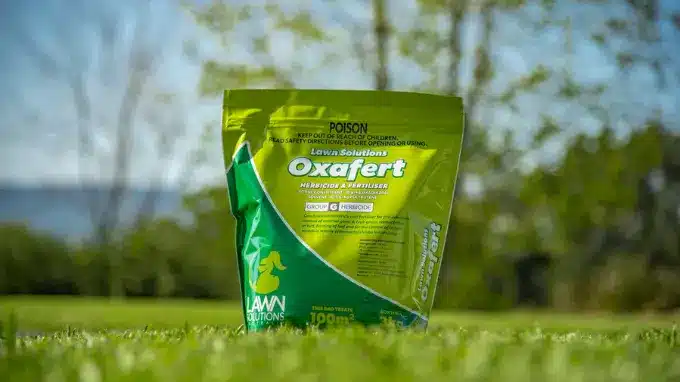
Oxafert is your defensive play. A combined pre-emergent herbicide and fertiliser, it creates a barrier at the soil level that stops wintergrass and broadleaf weeds from germinating before they ever get a run on the board. Miss this window, and you’re spending spring on the back foot, pulling weeds, patching bare spots, and missing out on watching the footy finals with your mates. Apply it now, and you control the conditions before the opposition even takes the field.


Seasol
is your conditioning work. A seaweed-based plant and soil conditioner, it builds root strength, improves nutrient uptake, and helps your lawn handle the physical demands of winter, like cold snaps, frost and reduced sunlight without losing ground. Think of it as the recovery session your lawn didn’t know it needed. The kind of quiet, consistent work that shows up when the season kicks in and everyone else is playing catch-up. There is a quiet workhorse in every team, and this is the one in your garden shed.

Together, they’re a combination worth backing.

Why the First Two Weeks of July Matter

Timing in turf is everything. Oxafert works by intercepting weed seeds before germination, which means the application needs to happen before soil conditions trigger that process. The first two weeks of July sit right in that sweet spot for Victorian lawns. Soil temperatures are cold enough to keep your turf dormant, but still allow for the pre-emergent barrier to be in place before things start warming up. It’s your prime window for peak effectiveness.

Spring Form Is Built in Winter

The backyard that’s thick, even, and green in September didn’t get there by accident. It got there because someone made a good call in July and did the work, while everyone else was waiting for the sun to come back out.

That’s the StrathAyr mentality. Prepare properly, back the process and let the results speak for themselves when the season arrives.

To get your hands on Oxafert and Seasol, or to talk through what your lawn needs heading into spring, get in touch with the StrathAyr team on 1800 622 455. We’ll point you in the right direction.

Your Lawn. Your Legacy. Game On.

July 8, 2026/by Belle Plunkett
https://strathayr.com/wp-content/uploads/2026/06/Winter-Lawn-Care-FI.webp 800 1200 Belle Plunkett https://strathayr.com/wp-content/uploads/2025/10/StrathAyr-Logo-300x138.png Belle Plunkett2026-07-08 16:11:072026-07-08 16:12:26Give Your Lawn a July Pep-Up
Artificial turf with sunlight,Grass field blur

How Much Does Instant Turf Cost?

Blog, Residential

How Much Does Instant Turf Cost?

When planning a new outdoor space, one of the first questions people ask is what does instant lawn cost? While instant turf offers the fastest way to achieve a usable lawn, the final figure depends on turf variety, performance and how well it suits your site conditions.

Whether you’re upgrading an existing grass area or starting fresh with a new instant lawn, understanding what you’re paying for helps you make a more informed decision and avoid surprises once turf delivery arrives.

Let’s break down real pricing from StrathAyr, and we’ll also explain the practical factors behind the cost of natural turf.

What is instant turf, and what influences the cost?

Instant lawn turf is pre-grown grass harvested with established soil and roots, then installed as new turf over prepared ground. It delivers an immediate green finish compared to seeding, which takes weeks to establish.

The advantage of natural lawn options is clear: you get an instant result and a functioning surface almost immediately once turf installation is complete.

But unlike artificial alternatives such as synthetic turf, natural instant turf is a living material. That means cost is influenced by growth conditions, breeding quality and long-term performance characteristics.

StrathAyr instant turf price (per m²)

Below are indicative prices for popular varieties available from StarthAyr:

Turf Variety Instant Turf Price (per m²)* Key Characteristics Best Suited For
Nullarbor Couch $11.50 Fast-establishing, hardy, good recovery, cost-effective option Sunny residential lawns and general-use outdoor spaces
Eureka Premium VG Kikuyu $13.50 Tough, fast-growing, excellent wear recovery High-use family lawns, pets, and sports or recreational areas
RTF Tall Fescue $15.90 Cool-season variety, year-round colour, self-repairing Balanced year-round performance in cooler or transitional climates
TifTuf Bermuda $15.85 Highly drought-tolerant, durable, low water use High-traffic areas, warm climates, and active outdoor spaces
Sir Walter Buffalo $17.50 Soft leaf, shade-tolerant, family-friendly premium lawn Homes with shaded zones, children, and pets
Sir Grange Zoysia $21.50 Ultra-premium, fine leaf, minimal maintenance once established Luxury landscapes seeking a low-maintenance premium finish

*These prices reflect supply only and exclude additional factors such as delivery fees and site preparation. In most projects, new lawn installation costs will also need to be considered separately.

What actually influences instant turf cost?

1. Grass type and performance

Different turf varieties are bred for specific outcomes: durability, colour, shade tolerance or water efficiency.

For example, kikuyu grass is a cost-effective, fast-growing option often used in high-traffic areas because it recovers quickly and establishes dense coverage. Premium varieties, on the other hand, are bred for finer appearance, reduced mowing and improved resilience.

2. Sun exposure and site conditions

Lawns exposed to full sun behave very differently from shaded areas. Turf that can thrive in harsh sunlight without burning or thinning generally costs more due to its improved genetic resilience.

Poor site conditions, such as compacted soil or uneven grading, can also increase preparation requirements before turf installation, which affects total project cost.

3. Durability and wear resistance

Some lawns are designed for light residential use, while others are built for hard-wearing, heavy-duty performance.

High-end turf varieties are often selected for their ability to withstand constant foot traffic while maintaining a perfect lawn appearance. This is especially important for families, commercial landscapes and recreational spaces.

4. Ongoing maintenance requirements

One of the biggest cost drivers over time is maintenance.

A low-maintenance lawn typically requires less mowing, watering and fertilising. Many modern turf varieties are also bred to be weed-resistant, reducing long-term upkeep.

By contrast, cheaper turf options may require more ongoing care, especially during establishment.

5. Drought tolerance and water efficiency

In Australian conditions, turf that can withstand drought conditions is highly valued. These varieties are engineered to maintain colour and density even under water restrictions or extended dry periods.

While they may cost more upfront, they often reduce ongoing irrigation and maintenance costs significantly.

6. Root development and establishment

Healthy turf is defined by strong, deep root systems, which allow it to anchor quickly into the soil and establish stability.

Varieties that develop faster root networks tend to perform better long-term, but the production process increases their base cost.

Added instant lawn costs for your project

The sticker price per square metre is only part of the equation. A full project typically includes:

  • Turf delivery and logistics
  • Site preparation and levelling
  • Removal of existing grass or debris
  • Soil improvement or topsoil import
  • Professional installation
  • Edging around garden beds and paved areas

Efficient supply chains matter here too. StrathAyr’s reliable delivery ensures turf arrives fresh, hydrated and ready for installation. Delays can significantly impact turf quality if not managed properly.

Choosing the right lawn turf for your project

The best turf choice depends on how the space will be used:

  • High-use family lawns / pets / sports: Sir Walter, Kikuyu or TifTuf
  • Shaded or mixed light areas: Sir Walter
  • Low maintenance premium finish: Sir Grange Zoysia
  • Balanced year-round performance: Tall Fescue

Matching turf to conditions is essential to avoid costly replacements or ongoing repair work after installation. StrathAyr can help you choose the best turf variety for your use-case.

What should you expect to pay?

So, what is the real instant lawn cost?

Based on current StrathAyr pricing:

  • Entry-level turf: $11–$13/m²
  • Mid-range turf: $15–$17/m²
  • Premium instant turf: $17–$21+ per m²

However, your project must consider costs outside the actual turf itself, including site conditions, soil preparation, installation method, delivery logistics and long-term maintenance expectations, which will all influence the final investment.

When selected correctly and installed properly, a high-quality natural turf system delivers long-term performance, visual appeal and usability, creating a durable outdoor lawn surface that continues to perform year after year.

Contact StrathAyr for an instant turf Melbourne price estimate today.

July 6, 2026/by Jack McDonald
https://strathayr.com/wp-content/uploads/2023/04/choose-the-right-turf.jpg 1280 1920 Jack McDonald https://strathayr.com/wp-content/uploads/2025/10/StrathAyr-Logo-300x138.png Jack McDonald2026-07-06 14:27:322026-07-06 16:45:47How Much Does Instant Turf Cost?
green grass seedlings growing

Grass Seed vs Turf: Which Performs Best in Australia?

Blog, Residential

Grass Seed vs Turf: Which Performs Best in Australia?

In Australian conditions, establishing a durable, reliable grass lawn is rarely straightforward. Between heat, drought, rainfall variability and constant wear from foot traffic, the success of a lawn depends heavily on how it is established from the beginning.

When comparing grass seed vs turf, the difference is about more than appearances; it is about performance. For councils, sports fields, commercial landscapes and active residential environments, the choice between seed and instant turf has a direct impact on usability and long-term maintenance outcomes.


The reality of establishing a lawn in Australian conditions

Creating a healthy lawn in Australia requires more than simply placing seed or turf on the ground. Soil quality, climate and timing all play a critical role in success.

Whether working with an existing lawn or starting fresh, establishment is the most vulnerable stage of any surface. Poor preparation, inconsistent watering or adverse weather can quickly compromise results.

In many cases, the difference between success and failure comes down to the establishment method chosen from the outset.


Grass seed: Why it often fails in high-use environments

Grass seed is often selected as an affordable option, particularly for large areas. However, in real-world conditions, it carries a significant risk during establishment.

Germination and establishment challenges

Grass seed relies on successful germination, which can take six to eight weeks depending on weather and soil conditions. During this period, seedlings remain highly vulnerable.

Factors such as temperature fluctuations, inconsistent rainfall and soil movement can all disrupt growth when sowing seeds across exposed ground.

Surface vulnerability and patchiness

It is common for seeded lawns to develop uneven growth patterns. Without consistent protection, patchy areas can form, particularly where foot traffic is present.

Even when lawn seed is carefully applied, maintaining even coverage across the entire area is difficult in practice.

Weed competition and surface weakness

During early growth, weed intrusion is common. A lawn from seed often struggles to compete in open soil conditions, especially when sowing lawn seeds on large or exposed sites.

Ongoing maintenance requirements

Establishing a green lawn from seed requires constant monitoring, proper irrigation and care. While seed has many benefits, including lower upfront cost, it demands patience and precise maintenance to succeed.


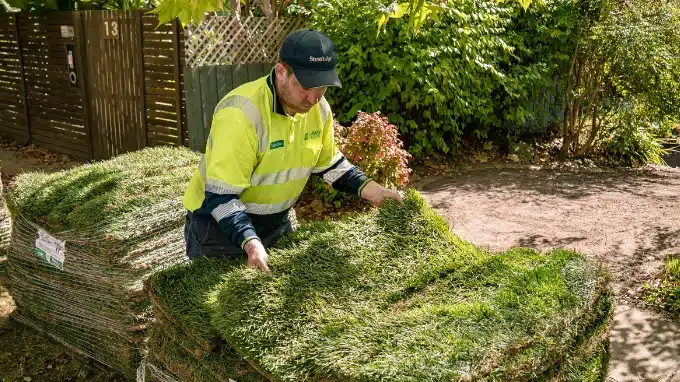
Turf being delivered and unpacked

Instant turf: Your ready-to-perform surface

Instant turf provides a fundamentally different outcome. Instead of waiting for germination, turf is delivered as a mature, fully developed surface that can be installed immediately.

Immediate coverage and functionality

Unlike seed, which takes weeks to establish, newly laid turf rolls or slabs provide instant ground coverage. Once installed, a new lawn is immediately defined, structured and functional.

Pre-grown strength and stability

Instant turf consists of pre-grown grass with an established root system. This means the surface is already resilient at the time of installation.

When laying turf, the result is a stable, uniform surface that is ready for use far sooner than seeded alternatives.

Faster transition to usability

Within a short establishment period, typically only a few weeks, your instant lawn will integrate into the soil profile. With correct watering and care, it quickly becomes a fully functional new turf lawn.


Why instant turf outperforms seed in real conditions

In high-traffic environments, performance depends on stability during the earliest stages of establishment.

StrathAyr’s hard-wearing instant turf provides:

  • Immediate surface integrity after installation
  • Strong resistance to early wear and compaction
  • Consistent, even coverage across the entire site
  • Reduced risk of failure compared to seeded establishment

When laid correctly on properly prepared soil, instant turf eliminates the uncertainty associated with germination and early growth.


High-performance turf types for Australian conditions

StrathAyr supplies a range of turf varieties designed for durability, climate adaptability and long-term performance across different lawn types and environments.

  • TifTuf Hybrid Bermuda: Elite wear tolerance and rapid recovery in hot conditions
  • Eureka Kikuyu: Fast establishment and strong self-repairing growth
  • Sir Walter Buffalo: Adaptable performance across shaded and open areas
  • Sir Grange Zoysia: Premium fine-leaf turf with long-term durability
  • RTF Tall Fescue: Reliable performance in cooler and transitional climates

Each grass type is selected based on performance requirements, site conditions and intended use.


When grass seed is still used

Grass seed remains suitable in specific low-pressure applications, particularly where budget or timing is not critical.

Typical use cases include:

  • Broad landscape revegetation projects
  • Large rural or open spaces
  • Areas where gradual establishment is acceptable

However, in high-traffic environments, the extended establishment time and risk of uneven growth make it less suitable than instant turf.


The establishment difference that matters

The key difference between seed and turf lies in the early establishment window.

Seeded systems require careful management during the initial six to eight weeks, where vulnerability is highest. In contrast, instant turf delivers immediate structure, allowing for a faster transition into a healthy lawn.

Even when both are maintained correctly, the reliability gap remains significant.


Instant turf vs grass seed: The final verdict

When comparing turf vs seed-based systems, the outcome is clear in demanding Australian environments.

While seed may offer a lower upfront cost, it introduces uncertainty, longer establishment times and a higher risk of surface failure.

Instant turf delivers a more controlled, predictable result, providing immediate structure, faster usability and long-term durability.

For councils, sports facilities, commercial landscapes and active residential properties, instant turf remains the most reliable method for achieving a consistent, high-performance surface.

StrathAyr’s turf solutions are designed to ensure every installation performs from day one and continues to deliver long-term resilience under Australian conditions.

Need help choosing your grass type?

Contact StrathAyr today.

July 6, 2026/by Jack McDonald
https://strathayr.com/wp-content/uploads/2023/04/grass-seedling.jpg 1124 1920 Jack McDonald https://strathayr.com/wp-content/uploads/2025/10/StrathAyr-Logo-300x138.png Jack McDonald2026-07-06 14:22:032026-07-06 16:46:43Grass Seed vs Turf: Which Performs Best in Australia?
Woman and young girl sitting on RTF tall fescue turf

The Best Hard-Wearing Grass Options for Australian Lawns

Blog, Residential

The Best Hard-Wearing Grass Options for Australian Lawns

Australian landscapes demand turf that can withstand heat, drought, heavy use and constant environmental pressure while still maintaining appearance and performance. From sports fields and council reserves through to commercial developments, landscapes and high-traffic residential lawns, choosing the right grass is essential to long-term success.

StrathAyr supplies a range of engineered turf varieties known for superior quality, durability and suitability across demanding Australian conditions.

What makes a grass truly hard-wearing?

Hard-wearing turf is defined by more than appearance alone. It must combine strength, adaptability and resilience across the seasons.

Key characteristics include:

  • Strong wear resistance under repeated use and foot traffic
  • Fast recovery after stress or surface damage
  • Dense growth that helps protect against weeds and thinning
  • Deep root systems that support long-term health and stability
  • Adaptability to different soil types, rainfall patterns and property uses

A truly high-performance lawn must also cope with seasonal variation, from warmer months through to cooler months, without losing structure or consistency.

The most hard-wearing grass types available in Australia

StrathAyr’s turf range is designed for performance-driven environments where durability and consistency matter. Each variety below has been selected for its ability to perform under pressure in Australian conditions, whether in full sun, partial shade or high-traffic settings.

TifTuf Hybrid Bermuda: The benchmark for wear and recovery

TifTuf Hybrid Bermuda is widely recognised for its exceptional durability and is often the ideal choice for sports surfaces and high-use landscapes. It delivers outstanding performance in hot, dry environments and maintains strength during extended drought conditions.

Key strengths include:

  • Exceptionally high wear tolerance under constant activity
  • Rapid recovery and fast regrowth after damage
  • Excellent drought efficiency in harsh weather patterns
  • Dense surface structure that produces a consistent finish

TifTuf is particularly effective where turf must withstand repeated use without compromising surface integrity.

Eureka Kikuyu: Fast-growing strength for high-traffic areas

Eureka Premium VG Kikuyu is known for its vigorous growth and self-repairing nature, making it a strong performer in active environments. It is particularly suited to open spaces, recreational areas, and large-scale landscapes where fast coverage is required.

Key strengths include:

  • Rapid establishment across bare soil areas
  • Strong spreading ability that quickly repairs worn sections
  • Excellent performance in full sun and warm environments
  • Highly suitable for family lawns with dogs and active use

Its fast growth habit helps create a thick, resilient surface that can handle consistent pressure from foot traffic.

Sir Walter Buffalo: Reliable all-round durability with shade tolerance

Sir Walter Buffalo remains one of Australia’s most trusted turf varieties due to its adaptability across a wide range of conditions. It performs particularly well in shaded areas, including around trees and built structures where sunlight is limited.

Key strengths include:

  • Strong performance in shade-tolerant environments and partial sunlight
  • Soft leaf texture suitable for family use
  • Reliable coverage in both residential and commercial properties
  • Strong resistance to seasonal stress and environmental change

Sir Walter is often selected for gardens where comfort, durability, and low maintenance are equally important.

Sir Grange Zoysia: Premium strength with a fine-lawn finish

Sir Grange Zoysia is a premium turf option designed for high-end landscapes where appearance and resilience must align. It is slower to establish but delivers exceptional long-term performance once mature.

Key strengths include:

  • Dense growth habit that supports long-term durability
  • Excellent drought resistance once established
  • Premium fine-leaf appearance for landscaped environments
  • Strong adaptability across varied site conditions

Sir Grange is particularly effective in curated landscapes where long-term presentation is a priority.

RTF Tall Fescue: Cool-season durability for variable conditions

RTF Tall Fescue provides a cool-season alternative that performs well in transitional climates and shaded environments. It is often used where consistent year-round colour is required, particularly in shaded or partially shaded lawns.

Key strengths include:

  • Strong performance in cooler climates and seasonal shifts
  • Adaptability to shaded areas and mixed light conditions
  • Deep root structure supporting drought resilience
  • Reliable year-round coverage in variable environments

RTF is commonly used in environments where weather variability and shade influence turf performance.

Nullarbor Couch: Traditional strength for sunny, high-use areas

Nullarbor Couch is a hardy, traditional turf variety suited to sunny, high-traffic environments. It performs best in open spaces where sunlight exposure is consistent.

Key strengths include:

  • Strong recovery from surface wear and tearing
  • Dense growth for durability under pressure
  • Suitable for sports-style lawns and recreational use
  • Performs well in full sun with regular maintenance

Its resilience makes it a good choice for high-use outdoor areas requiring consistent coverage.

Which grass should you choose for high-traffic areas?

Selecting the right turf depends on site conditions, usage intensity and environmental exposure.

  • Sports fields and elite performance surfaces → TifTuf Hybrid Bermuda
  • Fast-repairing family lawns and active spaces → Eureka Premium VG Kikuyu
  • Shaded gardens and residential landscapes → Sir Walter DNA Certified Buffalo
  • Premium landscaped properties → Sir Grange Zoysia
  • Cooler climates or mixed light conditions → RTF Tall Fescue
  • Sunny recreational lawns → Nullarbor Couch

Every site is different, and factors such as mowing height, soil condition and maintenance practices will influence long-term performance. StrathAyr can help you choose the best grass type for your usage.

StrathAyr’s hard-wearing lawn turf range

The best hard-wearing grass choice is about selecting a variety that aligns with the environment, usage and long-term expectations.

From summer heat to winter rainfall, and from shaded areas under trees to open commercial landscapes, the right turf must balance durability, recovery, and ongoing health.

StrathAyr’s range ensures every project can achieve a strong, resilient surface that performs consistently across changing conditions, helping protect the value and appearance of the property over time.

Talk to the experts at StrathAyr today.

July 6, 2026/by Jack McDonald
https://strathayr.com/wp-content/uploads/2019/03/RTF-Fescue-1.jpg 398 503 Jack McDonald https://strathayr.com/wp-content/uploads/2025/10/StrathAyr-Logo-300x138.png Jack McDonald2026-07-06 14:14:272026-07-06 14:28:54The Best Hard-Wearing Grass Options for Australian Lawns

Sir Grange vs Sir Walter Buffalo Grass

Blog, Residential

Sir Grange vs Sir Walter Buffalo Grass

Which lawn is right for your space?

Choosing the right turf is about more than appearance. It influences how a lawn performs under foot traffic, how it responds to Australia’s climate, how much maintenance it requires, and how well it holds its presentation over time.

Two of the most trusted premium turf varieties in Australia (Sir Grange Zoysia and Sir Walter DNA Certified Buffalo) deliver very different advantages depending on the project. From luxury residential landscapes and golf course surrounds to sports facilities, commercial developments, schools, councils and high-profile public spaces, both offer proven performance in demanding environments.

Understanding the differences between Sir Grange turf and Sir Walter buffalo turf will help you select the right long-term solution for your property, project or facility.

Overview of Sir Walter Buffalo Grass

Sir Walter DNA-Certified buffalo grass is one of Australia’s most widely installed turf varieties, trusted across residential properties, schools, parks, commercial landscapes and recreational spaces. Known for its reliability and versatility, it provides a soft, resilient surface that performs consistently across varied Australian conditions.

As a leading buffalo grass variety, Sir Walter is often selected where durability, shade tolerance and fast recovery are priorities.

Key characteristics

  • Soft leaf and broad blade structure
  • Strong shade-tolerant performance
  • Reliable growth across Australian climates
  • Fast recovery from wear and damage
  • Comfortable, versatile turf solution for residential and commercial environments

Growth and maintenance

Sir Walter has a moderate to fast growth habit, supporting strong recovery in active spaces while requiring more regular maintenance than slower-growing premium turf varieties.

Maintenance expectations

  • More frequent mowing during the active growing season
  • Regular fertilising for optimal colour and presentation
  • Responsive growth during warm seasons
  • Strong regeneration after heavy use or seasonal stress

This warm season grass makes Sir Walter a dependable choice for projects requiring practical performance, visual appeal and adaptability.

Best suited for:

  • Family homes and residential landscapes
  • Schools and childcare centres
  • Council parks and public open spaces
  • Sports and recreational surrounds
  • Commercial properties with mixed sun and shade
  • High-use lawns with children and pets

Overview of Sir Grange Zoysia

Sir Grange Zoysia is a premium Aus-GAP certified grass variety known for its refined appearance, dense growth and exceptional durability. Frequently used in luxury residential landscaping, golf environments, premium commercial developments and architecturally designed outdoor spaces, it delivers a highly manicured finish with significantly reduced maintenance requirements.

A well-established Sir Grange lawn is recognised for its fine texture, deep green colour and consistently neat appearance.

Key characteristics

  • Fine leaf blade and dense growth habit
  • Stunning dark green colour in full sun exposure
  • Lush green appearance with uniform coverage
  • Extremely high wear tolerance under heavy foot traffic
  • Slow-growing nature and low maintenance requirements

Sir Grange’s performance and growth

One of the defining strengths of this turf is Sir Grange’s ability to maintain a premium finish with minimal intervention. Its slow-growing nature contributes to:

  • Reduced mowing frequency and less mowing overall
  • Minimal fertilising requirements compared to faster-growing turf types
  • Dense coverage that naturally suppresses weeds
  • Long-term presentation consistency in commercial and public environments

A well-established Sir Grange Zoysia turf creates a smooth, highly refined surface with a lush lawn feel, particularly in full sun conditions.

Sun and environmental performance

The Sir Grange variety performs best in direct sunlight, where it develops its richest colour and tightest growth habit. While it can tolerate some shade, its premium aesthetic and density are most evident in open, sunny environments.

In areas that lack full sun exposure, Sir Walter may provide more reliable long-term performance. Its strength in partially shaded spots makes it highly versatile for varied landscape conditions, particularly where buildings or trees limit sunlight.

Best suited for:

  • Luxury residential landscapes
  • Golf courses and premium sporting surrounds
  • Commercial developments and hospitality venues
  • Rooftop and architectural landscapes
  • High-end outdoor entertaining areas that host outdoor gatherings
  • Councils and public spaces seeking reduced maintenance


Sir Grange vs Sir Walter: Key differences

While both are premium turf solutions, they deliver very different outcomes depending on maintenance priorities, usage demands and the desired visual finish.

Appearance and texture

Sir Walter produces a soft, traditional buffalo lawn with a broader blade and relaxed natural feel. Its softer leaf appearance creates a comfortable surface suited to family homes, parks and recreational areas.

Sir Grange delivers a more refined, manicured aesthetic with a fine leaf structure and dense growth habit. Its uniform coverage creates a premium green appearance often preferred in high-end commercial and architectural applications.

Shade tolerance and sunlight performance

Sir Walter is highly shade-tolerant, performing reliably in partially shaded spots and areas with inconsistent sunlight exposure. Its reputation for embracing shade makes it a strong solution for complex landscape environments.

Sir Grange performs best in direct sunlight, where it develops its deepest green colour and most vibrant lawn presentation. In full sun commercial or recreational spaces, it creates a striking and highly consistent finish.

Maintenance requirements

Maintenance is one of the clearest differences between these two turf varieties.

Sir Walter

  • More frequent mowing
  • Moderate fertilising requirements
  • Faster growth and recovery
  • Active seasonal growth patterns

Sir Grange

  • Minimal mowing due to slow growth
  • Lower fertilising needs
  • Long-lasting density with reduced upkeep
  • Lower ongoing maintenance costs over time

Wear and durability

Both grasses perform well under use, but their strengths differ depending on the environment.

Sir Walter recovers quickly from regular wear, making it ideal for active family lawns, schools and general recreational use.

Sir Grange offers exceptional qualities in high-traffic environments, maintaining a refined appearance even across premium commercial landscapes, golf surrounds and hospitality venues.

Climate suitability in Australia

Both Sir Walter and Sir Grange are warm-season turf varieties developed to perform in the harsh Australian climate.

Sir Walter adapts well across a broad range of climates, including humid conditions and shaded environments.

Sir Grange thrives in warm climates with strong sun exposure, where it maintains excellent density, colour retention and surface presentation. It is also recognised for its high drought tolerance once fully established.

Like many warm-season varieties, both turf types may experience some winter browning during cooler months, particularly in southern regions.

Together, they represent two leading turf solutions trusted across residential, commercial, recreational and civic landscaping projects throughout Australia.

Ongoing Maintenance Comparison: What to Expect

Sir Walter Buffalo Turf

  • Regular mowing during peak growth periods
  • Moderate fertilising requirements
  • Strong recovery after wear and damage
  • Reliable performance across varied conditions
  • Practical and adaptable for multi-use spaces

Sir Grange Zoysia Lawn

  • Minimal mowing due to slow growth
  • Lower fertilising requirements
  • Excellent drought tolerance once established
  • Dense, long-term coverage with reduced upkeep
  • Ideal for premium projects seeking lifecycle efficiency


Durability Under High Foot Traffic & Everyday Use

Both turf varieties are suitable for active environments with high foot traffic, but they serve different priorities.

Sir Walter is ideal for casual, high-use environments where comfort, resilience and shade tolerance are important.

Sir Grange is often preferred for projects where long-term presentation and lower maintenance are key considerations.

Which Lawn is Right for You? Sir Grange Zoysia vs Sir Walter Buffalo


Choose Sir Walter Buffalo grass if you want:

  • Strong shade tolerance
  • Fast recovery and dependable growth
  • A soft, family-friendly lawn surface
  • A versatile turf solution for varied environments
  • Reliable performance in recreational or public spaces

Choose Sir Grange Zoysia if you want:

  • A premium, fine-bladed grass variety
  • A consistently neat and refined finish
  • Minimal mowing and reduced maintenance
  • A vibrant lawn with deep green colour in full sun
  • Long-term visual presentation in commercial settings


Installation Considerations

Proper installation is essential for both turf varieties.

Sir Walter establishes quickly and adapts easily to a wide range of soil conditions, making it a practical option for projects requiring faster establishment and reliable coverage.

Installing Sir Grange requires well-prepared soil and a slightly longer establishment period, but rewards this investment with exceptional durability, density and premium visual appeal over time.

For commercial landscapes, councils, sports surrounds and large-scale developments, proper site preparation and irrigation planning are particularly important to maximise long-term performance amid changing demand, market dynamics and usage expectations.

Sir Walter vs Sir Grange: What’s your choice?

When comparing Sir Grange turf vs Sir Walter buffalo turf, the right choice depends on how the space will be used, the level of maintenance desired, and the visual outcome you want to achieve.

Sir Walter remains a trusted, shade-tolerant turf solution with reliable performance across residential, recreational and public environments.

Sir Grange sits within the premium Zoysia range, delivering a low-maintenance lawn experience with refined aesthetics, durability and long-term value for luxury residential, commercial and sporting applications.

Both are excellent turf choices capable of helping create the perfect lawn, each offering a different interpretation of premium Australian turf performance.

July 6, 2026/by Jack McDonald
https://strathayr.com/wp-content/uploads/2017/10/Sir-Walter-11-web.jpg 684 1024 Jack McDonald https://strathayr.com/wp-content/uploads/2025/10/StrathAyr-Logo-300x138.png Jack McDonald2026-07-06 13:59:402026-07-07 12:08:13Sir Grange vs Sir Walter Buffalo Grass

Your Backyard Fertiliser Schedule for a Cold Victorian Winter

Blog, Residential

Winter in Victoria is a nice time to wind down, but it’s not the time to switch off! While your lawn might be running at a lower tempo right now, you’ve got the power over the next few months to make some decisions that will determine whether your backyard comes out of winter firing or floundering. A sharp fertiliser schedule is the difference between a lawn that limps into spring and one that hits the ground running, and we’re here to ensure yours is the latter.

Here is how to play it smart across the cold months, StrathAyr style.

Understand the Conditions Before You Act

Victorian winters are not uniform. A lawn in Ballarat faces a very different challenge to one in Geelong or the outer eastern suburbs of Melbourne. Cool nights, heavy frosts, and prolonged overcast periods all slow turf metabolism significantly. Warm-season grasses like Sir Walter DNA Certified Buffalo and Eureka Premium VG Kikuyu will go dormant or near-dormant, while cool-season varieties like RTF Tall Fescue stay active and have the ability to make solid gains through winter with the right support. Knowing what you are working with before you start is your first, most important step.

Early Winter: Set Your Base

The first move in any good game plan is establishing a solid foundation. In early June, if you have not already applied a slow-release fertiliser coming out of autumn, now is the time to get one down. Look for a product with a balanced NPK ratio that leans slightly higher in potassium. Potassium is the hardening nutrient, designed to toughen cell walls, improve frost tolerance, and help your turf withstand the stress of cold nights and wet conditions.

For warm-season grasses heading into dormancy, keep rates conservative. You are not trying to push growth during this season; you are building resilience. For cool-season grasses that are still actively growing, a light nitrogen inclusion will keep colour and density ticking over without pushing excessive soft growth that is vulnerable to disease.

Mid Winter: Hold Your Position

July is about discipline. Resist the urge to over-fertilise. Cold soils have reduced biological activity, which means nutrients move slowly and the risk of runoff or lockup is higher. Pushing heavy nitrogen through a cold, wet lawn is one of the most common mistakes recreational turf managers make, and it rarely ends well.

If your cool-season grass is looking pale or tired, a light foliar application of iron can lift colour without stimulating the kind of soft growth that invites fungal issues. Keep your mowing height up, stay off the lawn when it is frosted, and let the turf do its job.

Mid-winter is also a good time to check your pH. Acidic soils become less efficient at nutrient uptake regardless of what you put on the surface. If your pH is sitting below 6.0, a light lime application can make everything else you do through winter and into spring work harder for you.

Late Winter: Prepare for the Sprint

By August, the days are starting to lengthen and soil temperatures will begin to creep upward. This is when your pre-season preparation begins in earnest. A well-timed slow-release fertiliser application in late August positions your turf to respond quickly when the warm weather arrives, rather than spending the first weeks of spring catching up.

For warm-season varieties, this is not yet the time to go hard on nitrogen. Wait until soil temperatures are consistently above 14 degrees before pushing growth. Going too early with a heavy nitrogen feed on a dormant lawn will deliver little benefit to the plant and can fuel weed competition instead.

For RTF, a more complete fertiliser application in late August is appropriate. That’s because cool-season varieties are still in their active growth window during this time and will respond well to a balanced feed as they head toward their peak performance season.

The Consistent Habits That Win

Beyond the fertiliser calendar, winter is won through consistent execution. Keep your mower blades sharp and your cutting height raised. Remove clippings during periods of wet weather to reduce disease pressure. Aerate if compaction is an issue, particularly on high-traffic areas, as this improves the movement of water and nutrients through the profile.

Water less frequently but do not stop entirely. Turf still needs moisture through winter, particularly during dry, frosty periods where the surface may look damp but the root zone is running short. Remember, premierships are won during pre-season, so think of staying consistent with lawn care in winter as your backyard’s pre-season.

Come Spring, You Will Know

There are no shortcuts in a Victorian winter. The lawns that come out of August looking sharp and full of colour are the ones that were managed with intention from the first cold snap. Stick to the schedule, read your conditions, and make adjustments based on what your turf is telling you. Spring rewards preparation. Start earning it now.

Has this got you wondering? 

If you’d like more information on winter maintenance tips and tricks, get in touch with the StrathAyr team today. They’re always available to help keep your backyard in tip-top shape, year round.

June 17, 2026/by Belle Plunkett
https://strathayr.com/wp-content/uploads/2026/06/Fertiliser-FI.png 800 1200 Belle Plunkett https://strathayr.com/wp-content/uploads/2025/10/StrathAyr-Logo-300x138.png Belle Plunkett2026-06-17 16:12:032026-06-17 16:14:52Your Backyard Fertiliser Schedule for a Cold Victorian Winter

Understanding Winter Dormancy and Frost: What It Means for Your Turf

Blog, Residential

When the cooler months arrive, warm-season grasses do exactly what they’re designed to do. Growth slows, colour softens, and the lawn enters a period of rest. For anyone managing turf professionally, whether that’s a council open space team, a sportsground coordinator, or a trade operator with a client list to look after, this is well-understood territory, but for homeowners, this can be a little scary! Winter dormancy is not a sign that something has gone wrong; instead, it is a natural, predictable phase in the annual cycle of warm-season grasses, and knowing what to expect makes it straightforward to manage.

Winter Dormancy: The Grass Is Resting, Not Retreating

Warm-season varieties like TifTuf Hybrid Bermuda and Sir Walter DNA Certified Buffalo are genetically tuned to slow down when soil temperatures drop. Colour transitions from a deep green to a golden or straw-like hue, and active shoot growth pauses. This is the grass conserving energy and directing its resources below the surface, protecting the root system and preparing for a strong return in spring, in time for the backyard games to recommence.

There is nothing to remedy here. The turf is not struggling; it is doing precisely what healthy warm-season grass does. Dormancy actually plays a role in long-term turf health, giving the plant a period of reduced metabolic demand before the demands of a full growing season kick back in. Come the warmer months, a well-maintained warm-season lawn that has moved through dormancy cleanly will green up and grow away with good vigour. Think of it as a holiday for the lawn!

The practical implication for facility managers and contractors is simply to adjust your maintenance programme accordingly. Mowing frequency naturally reduces because of slowed growth, irrigation requirements drop, and fertiliser inputs should be wound back during dormancy to avoid unnecessary stress on a plant that is not actively growing. Keep traffic management in mind too, as dormant turf has a reduced capacity to recover from wear compared to an actively growing surface. For homeowners, the same rules tend to apply. Mow and water a little less, and keep the kids off the grass if you’ve just experienced a frost or heavy downpour. You’ll avoid muddy feet inside this way, too!

Frost: What It Does and How to Reduce the Damage

Frost presents a different set of considerations. While dormancy is a managed expectation, frost can cause real damage if the turf is caught in a vulnerable state or if certain practices are applied at the wrong time.

When frost forms on a turf surface, ice crystals develop within the leaf tissue. The damage occurs not from the frost itself sitting on the leaf, but from that tissue being disturbed while still frozen. Foot traffic across a frosted surface is one of the more common causes of frost damage, with the physical pressure rupturing cell walls and leaving behind that characteristic pattern of browning or blackened leaf marks. The rule is simple: keep traffic off frosted turf until the surface has fully thawed and the leaf tissue has had a chance to recover. This applies equally to mowing, which should never be done on a frosted surface.

Watering ahead of a forecast frost event is worth considering in some circumstances. A light irrigation in the early evening can help moderate the temperature at the soil surface, offering some protection to the crown of the plant, which is the part that matters most for recovery. The crown sitting close to the soil is where the plant’s regrowth potential lives, and protecting it through a frost period is the priority.

Where frost events are frequent or severe, site-specific factors come into play. Low-lying areas, shaded zones, and poorly drained surfaces tend to frost harder and recover more slowly. Understanding these microclimates on a facility allows for proactive management, whether that means modified traffic plans, strategic irrigation scheduling, or simply setting expectations around recovery timelines for affected areas.

Post-frost, resist the urge to intervene too aggressively. Brown leaf tissue following a frost event does not necessarily mean the plant is lost. Allow the surface to thaw fully and give the turf time before making any assessment about recovery. In most cases, once temperatures lift and soil warmth returns, well-established turf will grow through the damage without lasting impact.

If you’re a backyard turf enthusiast, we suggest a similar approach. Keep active feet and pets off frosty lawn until it has a chance to thaw out. We also recommend lifting your mowing height a little, as that extra length in the blade allows the grass to soak up what extra sunlight in can.

RTF Tall Fescue: For When Winter Green Is Non-Negotiable

Some homeowners don’t like the thought of their turf taking its annual break, and that’s fine too! Looking out onto a green backyard on a gloomy day is pretty special, and that’s where RTF Tall Fescue comes into play. As a cool-season grass, RTF operates on a different seasonal rhythm entirely. While warm-season varieties are resting through winter, RTF won’t lose its colour, producing dense, active turf through the coolest months of the year and holding its colour and structure through frost events that would send a warm-season surface into dormancy.

RTF has been specifically bred for performance across a wide range of conditions, and its deep root architecture sets it apart from standard fescue varieties. Those roots drive genuine drought tolerance for a cool-season grass, making it a practical option even in climates where summers can stress a less capable variety. It has earned its stellar reputation because it keeps its beautiful, deep green colour and remains soft underfoot through Victoria’s coldest season.

StrathAyr supplies RTF Tall Fescue alongside our full range of warm-season varieties, grown under the same standards that have underpinned our operation for more than 20 years.

If you’re after general winter maintenance advice or help with variety selection, get in touch with the team at StrathAyr today.

May 27, 2026/by Belle Plunkett
https://strathayr.com/wp-content/uploads/2026/05/Frost-WP-Feature-Img.png 800 1200 Belle Plunkett https://strathayr.com/wp-content/uploads/2025/10/StrathAyr-Logo-300x138.png Belle Plunkett2026-05-27 06:47:132026-06-01 15:58:28Understanding Winter Dormancy and Frost: What It Means for Your Turf

Why Mid-Winter Aeration Could Be the Most Important Thing You Do for Your Sports Fields This Season

Blog, Residential, Uncategorized

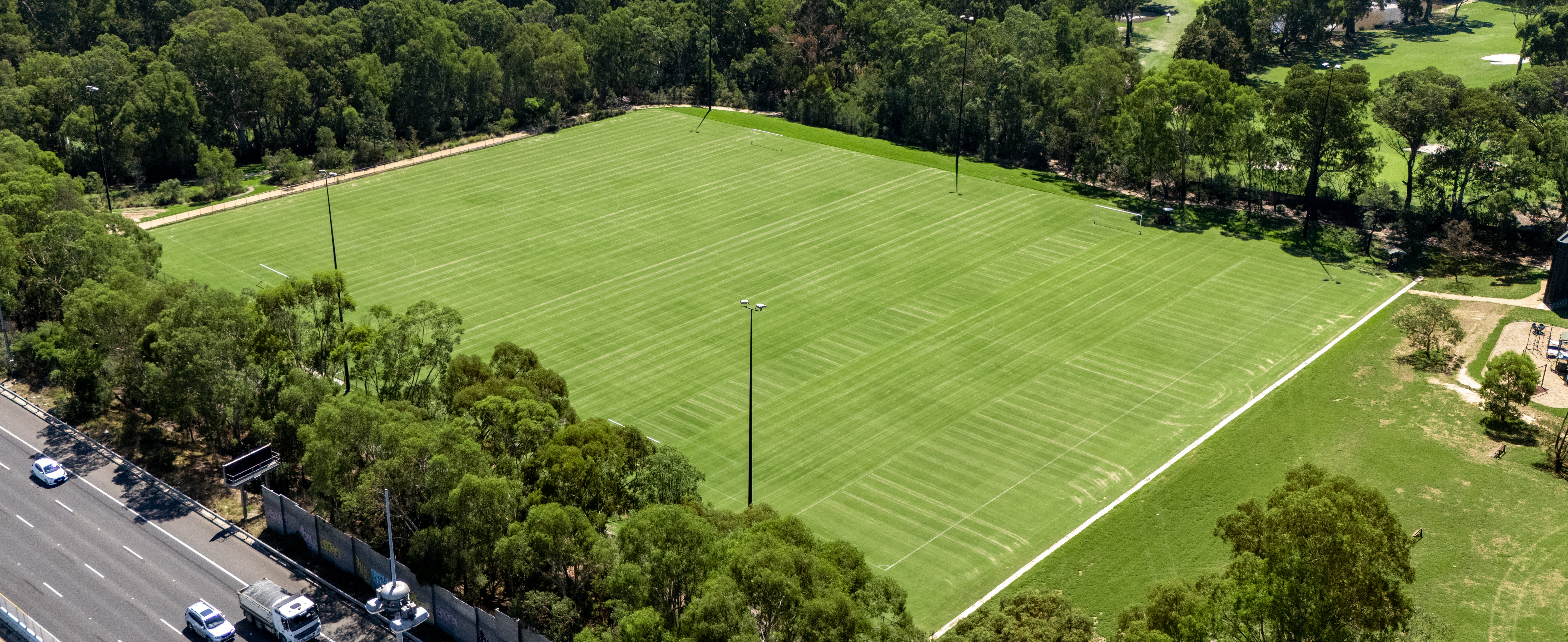
The temptation during winter is to do less, but mid-winter is a strategic window for sports turf aeration. Cooler temperatures, reduced growth rates, and lighter field use can make it feel like a safe time to ease off the maintenance schedule. But for turf managers serious about field performance come spring, mid-winter is actually one of the most strategic windows of the year, and aeration sits right at the heart of it.

Here’s why aerating your sports ground during the cooler months can set the foundation for everything that follows.

Compaction doesn’t take a winter break

High-use sports fields carry enormous compaction loads across the winter season. Football codes, rugby, and community sport all continue through the cooler months, and every boot, every tackle, and every piece of maintenance equipment adds to the compaction profile of your soil. Over time, that compaction restricts the movement of air, water, and nutrients through the soil profile, and a turf plant that can’t breathe or drink properly can’t recover, no matter how good your inputs are.

Mid-winter aeration directly addresses this. By opening up the soil profile while compaction is still accumulating, you’re breaking the cycle rather than waiting until the damage is done.

Root systems need oxygen year-round

It’s a common misconception that root activity slows to a standstill in winter. While growth rates drop, the root zone remains biologically active and still requires adequate gas exchange to function. Compacted soils trap carbon dioxide and deplete oxygen at the root level, stressing the plant even when surface conditions look acceptable.

Solid or hollow tine aeration during mid-winter restores that gas exchange, supporting root health through the coldest months and positioning the plant to respond aggressively when soil temperatures rise in spring. Fields that were aerated during winter consistently show faster, more uniform recovery than those that weren’t.

Water infiltration and drainage performance

Winter rainfall and irrigation runoff accumulate differently in a compacted soil. Instead of moving through the profile, water sits on or near the surface, creating the saturated, pugged playing surfaces that frustrate facility managers and put player safety at risk.

Aeration improves infiltration rates significantly, allowing surface water to move through the profile rather than pool. When combined with sand backfilling in hollow tine programmes, the effect is even more pronounced: you’re not just reopening existing channels, you’re building long-term drainage capacity into the profile itself. For councils and sporting clubs managing heavy winter fixture schedules, this translates directly to fewer unplayable days, more reliable field presentation, and less rolled ankles.

Setting up your fertiliser programme to actually work

Even the best fertiliser inputs are partially wasted on a compacted soil. Nutrients applied to a profile with poor infiltration either run off the surface or sit in the thatch layer, unable to reach the root zone where they’re needed. Aerating before or alongside your winter fertiliser application means your inputs have a direct pathway into the soil, improving uptake efficiency and reducing waste.

This is particularly relevant for programmes incorporating slow-release or granular products, where soil contact and moisture penetration are critical to activation.

Timing and method matter

Not all aeration is created equal, and the right approach depends on your field’s soil type, compaction depth, usage load, and the amount of recovery time available before the next fixture. Solid tines cause minimal surface disruption and suit fields that need to remain in play, while hollow tining removes a core of material and offers deeper remediation, which is ideal when there’s adequate recovery time scheduled.

Depth, spacing, and whether you’re backfilling with sand are all variables that should be tailored to the specific field and its performance goals. What works for a heavily trafficked community oval may not be appropriate for a regional stadium playing surface.

Don’t wait until the damage is visible

By the time compaction is obvious at the surface — pugging, surface cracking, poor drainage, slow recovery from wear — the soil profile has often been compromised for months. Mid-winter aeration is proactive maintenance, not reactive remediation. The fields that perform best in spring aren’t the ones that received the most product in September, but the ones that were managed correctly in June and July.

If you’re unsure where your fields sit right now, it’s worth getting a professional assessment before the back half of winter passes.

For general advice on maintenance and upkeep through winter at your sporting facility, get in touch with the StrathAyr team. We work alongside councils, sporting clubs, and venue managers across Australia to build maintenance programmes that ensure surfaces are perfected for play, all year round.

May 20, 2026/by Belle Plunkett
https://strathayr.com/wp-content/uploads/2026/05/Aeration-WP-Feature-Img.png 800 1200 Belle Plunkett https://strathayr.com/wp-content/uploads/2025/10/StrathAyr-Logo-300x138.png Belle Plunkett2026-05-20 07:30:092026-06-01 15:53:21Why Mid-Winter Aeration Could Be the Most Important Thing You Do for Your Sports Fields This Season

Winter Weed Management: Your Playbook

Blog, Residential

The cooler months have arrived across Victoria, and while your lawn shifts into a lower gear, the competition doesn’t stop. Winter grass, bindii, clover and a whole lineup of opportunistic weeds are already reading the conditions and looking for their opening. They will find it in any lawn that isn’t prepared, and if they do, you will spend spring chasing a result you should have locked in during autumn.

This is your pre-season window. What you do between now and the start of June truly determines whether your lawn comes out of winter in front, or comes out behind and spends the better part of spring trying to make up lost ground. The margin between those two outcomes is narrower than most people expect, and it almost always comes down to preparation timing. Luckily for you, StrathAyr is here to take the guesswork out of it.

Why winter weeds are a structural problem, not just an aesthetic one

It’s easy to treat weeds as a cosmetic issue — something unsightly that can be dealt with when the weather warms and the motivation returns. But weeds aren’t just a visual problem. Every weed that establishes over winter is actively competing with your lawn for water, nutrients and light at exactly the point when your turf has the least capacity to fight back.

Cool-season weeds like winter grass are particularly aggressive because they thrive in the same conditions that slow your lawn down. While your desirable turf variety reduces its growth rate and draws back resources, winter grass is doing the opposite. As the name suggests, it’s hitting its most productive period. Left unchecked, a winter grass population that looks manageable in June can look genuinely damaging by August, and by the time spring rolls around, you’re not reviving a lawn, you’re reclaiming one.

Broadleaf weeds like bindii and clover follow a similar pattern. They establish quietly during the cooler months, spread laterally while your lawn isn’t in a position to crowd them out, and become a nuisance well before most people think to address them. The time to act on these weeds is before they’re visible, not after.

The pre-emergent advantage

The most effective weed management strategy isn’t reactive. It’s preventive. Once winter grass has germinated, you’re already behind. You’ve moved from managing a potential problem to managing an existing one, and that’s a harder and more expensive place to be.

Pre-emergent herbicides work by targeting weed seeds during the germination window, before they’ve had the chance to establish above the soil. The critical trigger point for winter grass germination is soil temperature, specifically when it drops to around 14°C. That window is getting close, and in the southern parts of the state, it arrives earlier than people expect. Acting before that threshold is crossed is the difference between shutting the competition down before they get started and spending the season in a rearguard action.

Oxafert is the pre-season input we recommend for this job. It combines a pre-emergent herbicide with a controlled-release fertiliser, which means it handles two critical tasks in a single application. It blocks the germination of winter grass and other weed seeds while simultaneously delivering the nutritional foundation your lawn needs to maintain condition through the cold months. There’s no doubling up on applications, no juggling two separate programmes and no wasted effort. One well-timed application does the structural work that sets your lawn up for the entire winter period.

A well-conditioned lawn is its own best defence

Pre-emergent herbicide is part of the picture, but it’s not the whole story. A lawn that enters winter in strong condition is inherently more resistant to weed pressure than one that’s already thin, stressed or undernourished. Dense, healthy turf is one of the most effective weed barriers available because it simply doesn’t give opportunistic species the space to establish. Weeds don’t just arrive out of nowhere; they move into weak spots, and a lawn that doesn’t have weak spots doesn’t give them anywhere to go.

Maintaining that density through winter requires keeping your lawn’s nutritional programme running, even as growth slows. This is where a lot of lawn management falls short. It’s tempting to pull back on inputs during the cooler months and let the lawn tick along on its own, but the nutritional deficit that builds up over winter is exactly what creates the vulnerability weeds exploit. A lawn that’s been properly fed heading into and through the cold months comes out the other side with tight coverage and strong root development, giving it the kind of structural integrity that crowds out competition without needing a reactive intervention later.

Exceed Liquid Fertiliser is the input we use to keep lawns in that kind of competitive condition. It delivers balanced, fast-acting nutrition that supports strong growth and tight sward density through the season. Think of it as the conditioning work that keeps the whole squad performing when conditions are at their toughest. It’s not a quick fix, it’s the consistent maintenance that means your lawn doesn’t develop the gaps that weeds are waiting to exploit.

Your winter weed game plan

The programme doesn’t need to be complicated. Get Oxafert down now, while soil temperatures still allow effective pre-emergent uptake, and you block the first wave before it even starts. Keep Exceed in the rotation to maintain the thick, healthy coverage that does the ongoing defensive work for you all season long. Two inputs, applied with the right timing, and you’ve taken the most important steps most lawns will ever need for winter weed management.

Both Oxafert and Exceed Liquid Fertiliser are available to purchase through the team at StrathAyr. Give us a call to discuss your requirements and get your order in before the soil temperature window closes.

Preparation beats reaction, every time

Consistent, well-timed preparation beats reactive treatment every time. It’s the reality that every sports turf manager and backyard enthusiast works to, and that performance lawn management is built around. The lawns that come out of winter in the best shape aren’t the ones that got lucky. They’re the ones that were managed with intent, with the right inputs applied at the right time, and with a clear understanding of what the season demands. A little extra care now will pay dividends come September!

If you want to talk through the right approach for your surface this winter, the StrathAyr team is ready to help. We work with performance turf day in, day out, and we bring that same standard to every conversation we have about lawn management. Get in touch with the team to put a plan together before the season gets away from you.

May 11, 2026/by Belle Plunkett
https://strathayr.com/wp-content/uploads/2026/05/Winter-Weed-Featured-Image.png 800 1200 Belle Plunkett https://strathayr.com/wp-content/uploads/2025/10/StrathAyr-Logo-300x138.png Belle Plunkett2026-05-11 10:37:402026-05-11 13:06:58Winter Weed Management: Your Playbook

Reducing Winter Downtime on Community Sports Fields

Blog, Residential

Winter presents a familiar challenge for councils and sports field managers: reduced turf growth, higher wear pressure, and limited recovery time between matches. Without proactive planning, fields can quickly deteriorate, leading to closures, cancelled fixtures, and increased rehabilitation costs. Not the legacy many sporting grounds want to leave!

The good news is that with the right preparation and turf management strategies, winter downtime can be significantly reduced, and StrathAyr are here to help with that.

Start With Autumn Preparation

Strong winter performance begins well before temperatures drop. Autumn is the ideal time to repair worn or bare areas, improve soil structure and drainage, and apply fertiliser to build root strength and carbohydrate reserves. Fields that enter winter in good condition are far more resilient to traffic and cold stress than those already under pressure. It might seem early, but now is a great time to get ahead and be prepared for what winter may bring.

Choose Turf That Performs Year-Round

Not all turf varieties respond the same way in winter. Selecting a variety with proven cool-season performance or strong transition capability can make a major difference to surface stability and recovery. For high-use community ovals, turf that offers better colour retention, reduced dormancy, and faster recovery once conditions improve can help keep fields playable for longer and significantly reduce closure periods.

This is where Eureka Premium Kikuyu is truly a cut above the rest. Known for being the surface of choice across winter sporting codes, its aggressive lateral growth and impressive ability to recover make it the go-to choice for grounds that cop a hammering during peak season. With the power to repair divots and scuff marks within days, and the ability to maintain colour and density when other varieties are starting to struggle, Eureka Premium has become the no-brainer for many sporting fields across the state.

Focus on Drainage and Surface Stability

Waterlogged fields are one of the biggest contributors to winter downtime. Poor drainage increases compaction, surface damage, and player safety risks. Plus, nobody likes getting wet socks in the middle of a footy match! Addressing low spots and uneven surfaces, improving sub-surface drainage where possible, and aerating to reduce compaction and improve infiltration are all key considerations. Even small drainage improvements can have a noticeable impact during wet winter periods.

Manage Wear Proactively

Winter recovery is slow, so managing wear becomes critical. Councils can extend field usability by rotating goal mouths and high-traffic areas, limiting training loads during peak wet periods, and using temporary rest zones or alternative surfaces where available. These measures reduce concentrated damage and help preserve turf cover through the season. While this may not be ideal, it will help to ensure the field is match-ready, all season.

Plan Repairs Early

Waiting until spring to address winter damage often leads to longer recovery times and higher costs. Scheduling repair works as soon as conditions allow helps fields return to play faster and more consistently, and having turf supply and remediation plans in place before winter begins allows you to act quickly when windows of opportunity arise. This is where StrathAyr can become a valuable member of your squad. Getting in touch with our knowledgeable team during autumn to assist with the development of winter management and maintenance plans can be the difference between a season spent on the field or on the sidelines. We know where you’d rather be.

Keep Your Fields in Play

Reducing winter downtime isn’t about one single solution; it’s about preparation, turf selection, and proactive management. At StrathAyr, we work closely with councils and sports field managers to help keep community facilities open, safe, and resilient year-round.

If you’d like tailored advice on turf selection or winter field preparation, simply reach out to the team.

Because we care about your legacy. Game on.

May 7, 2026/by Belle Plunkett
https://strathayr.com/wp-content/uploads/2026/05/Community-oval.png 800 1200 Belle Plunkett https://strathayr.com/wp-content/uploads/2025/10/StrathAyr-Logo-300x138.png Belle Plunkett2026-05-07 08:26:592026-05-07 13:07:43Reducing Winter Downtime on Community Sports Fields
Page 1 of 8123›»

Guides on Installing Your Instant Lawn

  • Picture of RTF Tall Fescue GrassWatering Tips for Warm and Cool Season GrassesJune 7, 2025 - 6:24 pm
  • Sir Walter turfSir Walter Lawn Care GuideJanuary 26, 2024 - 9:00 am
  • How heavy is a slab of natural turf?August 11, 2023 - 4:14 pm
  • VIDEO – LOOKING AFTER A NEW INSTANT LAWNMarch 8, 2019 - 6:38 am
  • VIDEO – SOIL PH LEVELS FOR A HEALTHY LAWNMarch 8, 2019 - 6:35 am
  • USING DOLOMITE LIME TO REDUCE SOIL ACIDITY FOR A HEALTHY LAWNMarch 8, 2019 - 6:31 am
  • Improving SoilIMPROVING SOIL STRUCTURE WITH GYPSUM FOR A LUSH LAWNMarch 8, 2019 - 6:17 am
  • Fresh turf in front gardenHOW TO LAY TURF PART 4: AFTERCAREMarch 8, 2019 - 6:10 am
  • Leaf blower blowing leavesAUTUMN LAWN CAREMarch 8, 2019 - 5:59 am
  • Fertiliser sprinkled on lawnCAN YOU OVER FERTILISE YOUR LAWN?March 8, 2019 - 5:53 am
Get a free quote
StratAyr Lawn Solutions

I’M READY TO BUY TURFCall 1800 622 455

Facebook Instagram Twitter LinkedIn YouTube

88 Ekberg Rd, Seymour VIC 3661

Privacy Policy Delivery Information Terms & Conditions

Scroll to top