
Get a FREE Quote - Call 1800 622 455
StrathAyr
  • Home
  • Grass Types
    • HELP ME CHOOSE
    • RTF Tall Fescue Turf
    • TifTuf Hybrid Bermuda
    • Sir Walter Buffalo Turf
    • Sir Grange Zoysia
    • Eureka Premium VG Kikuyu
    • Nullarbor Couch
  • Prepare
  • Shop
  • Commercial
    • Landscape Turf
    • Sports Turf
    • Turf for Cricket
    • Turf for Football
    • Turf for Soccer
  • Blog
  • Care
  • Case Studies
  • Contact
    • Contact
    • Community Sponsorship
    • Ballarat
    • Geelong
    • Mornington Peninsula
    • Shepparton
  • Free Quote
  • Search
  • Menu Menu
  • 0Shopping Cart

Maintaining Sports Fields during Peak Season

Blog, Residential

Peak season is when sports fields earn their keep, but it’s also when they’re under the most pressure. Between back-to-back fixtures, training sessions, school use and community events, the demands placed on council and club-managed fields during the busiest months of the year can be relentless. Without a clear maintenance strategy, surface quality can decline quickly, and once it does, the cost of recovery far exceeds the cost of prevention.

Keeping fields safe, playable and visually presentable through peak season isn’t about doing more work. It’s about doing the right work at the right time and making smart decisions before problems become costly.

Understand What Peak Season Actually Demands

Every sport and every region has a different peak window, but the underlying challenge is the same: fields need to handle more traffic with less recovery time. In football and rugby codes, winter is the pressure point. For cricket and athletics, it’s summer. Regardless of the sport, the turf is being asked to perform consistently under conditions that push it to its limits.

Understanding the specific demands of your peak period — the volume of bookings, the type of use, and the climatic conditions at play — is the starting point for any effective maintenance plan. A field hosting three senior fixtures a week faces a very different reality to one accommodating junior training twice a week, and the maintenance approach should reflect that.

Prioritise Mowing Height and Frequency

Mowing is one of the most influential maintenance practices during peak season, yet it’s often where shortcuts are taken when schedules get tight. Maintaining the correct mowing height for your turf variety helps promote lateral growth, improve density and reduce the risk of scalping or stress. Cutting too low weakens the plant’s ability to recover between use, while letting it grow too long can affect ball roll, player footing and overall surface presentation.

During peak periods, slightly raising the mowing height can give turf a better chance of withstanding heavy wear. It’s a small adjustment that can make a meaningful difference to how the surface holds up across a demanding fixture schedule.

Stay Ahead of Compaction

High-traffic areas such as goal mouths, centre wickets, interchange zones and sideline corridors suffer from compaction faster than anywhere else on the field. Compacted soil restricts root growth, limits water infiltration and creates hard, uneven surfaces that increase the risk of player injury.

Regular aeration during peak season helps counteract this. Even light spiking or solid tining between events can improve air and water movement through the profile without causing significant surface disruption. For fields under extreme pressure, scheduling deeper aeration during any available rest window is well worth the short-term inconvenience. Play on!

Manage Irrigation With Precision

Water management during peak season is a balancing act. Too little moisture and the turf becomes stressed, thin and vulnerable to wear. Too much and you’re dealing with soft, unstable surfaces that churn up under foot traffic, and increase the risk of cancellations.

The key is matching irrigation to actual conditions rather than running a set-and-forget schedule. Monitoring soil moisture, adjusting run times based on weather patterns, and targeting irrigation to high-wear zones rather than applying blanket coverage all help keep the surface firm, safe and playable without wasting water. As we approach the winter sporting season, the importance of a flexible irrigation schedule cannot be overstated.

Feed the Turf to Support Recovery

Nutrition plays a critical role during peak season, but the approach needs to be tailored to the demands of the period. Heavy nitrogen applications that push excessive leaf growth can do more harm than good when fields are under constant traffic. Instead, a balanced fertility program that supports root health, stress tolerance and steady recovery between events is far more effective.

Slow-release fertilisers, targeted micronutrient applications and potassium-focused programs can all help turf maintain its resilience without creating a surface that’s lush but fragile. Working with the knowledgeable team at StrathAyr or a suitably qualified agronomist to align your nutrition program with your fixture calendar ensures the turf is being supported when it needs it most.

Rotate Use Wherever Possible

One of the most effective — and most overlooked — strategies for managing peak-season wear is simply spreading the load. Rotating goal ends, alternating training locations, and shifting line markings where field dimensions allow can prevent the worst damage from concentrating in the same areas week after week.

For councils managing multiple fields, scheduling fixtures to distribute use more evenly across available surfaces helps extend the life of every field in the network rather than running one or two into the ground while others sit underutilised.

Don’t Defer Spot Repairs

It’s tempting to push repairs out to the end of the season, but small issues left unattended during peak use tend to grow into much larger problems. A divot-scarred goal mouth in round five becomes a safety hazard and potential closure by round ten. Patching worn areas, topdressing minor depressions, and addressing bare patches as they appear keeps the surface intact and reduces the scale and cost of end-of-season rehabilitation.

Having turf on hand or a reliable supply arrangement in place means you can act on these repairs quickly rather than waiting for availability when every other facility in the region is trying to do the same thing.

Plan for the Season After Peak

The best time to plan post-season recovery is before the season ends. Or even better, right as it is starting. Knowing what renovation works will be needed, lining up turf supply, and booking contractors or equipment in advance means fields can move into recovery mode as soon as the final fixture is played. Delays at the back end of peak season compress recovery windows and put the following season’s surface quality at risk.

At StrathAyr, we work with councils and sports field managers to plan ahead, not just for peak-season maintenance, but for the full lifecycle of the playing surface. From variety selection and establishment through to ongoing management advice and turf supply when it’s needed most, our team is here to help keep your fields performing at the level your community expects.

If you’re preparing for an upcoming season or looking to improve how your fields hold up under pressure, get in touch with our team. We’re on yours.

Game on.
March 26, 2026/by Belle Plunkett
https://strathayr.com/wp-content/uploads/2024/11/community_hero.jpg 907 1920 Belle Plunkett https://strathayr.com/wp-content/uploads/2025/10/StrathAyr-Logo-300x138.png Belle Plunkett2026-03-26 12:22:002026-03-03 12:26:31Maintaining Sports Fields during Peak Season

Why Autumn Is the Best Time to Apply Oxafert — And How to Get It Right

Blog, Residential

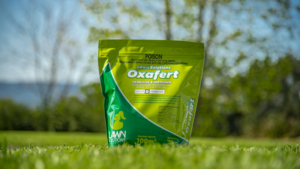
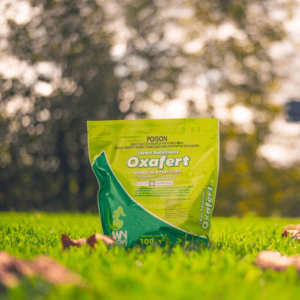
If there’s one product that consistently earns its place in a serious lawn care routine, it’s Oxafert. A fertiliser and pre-emergent herbicide combined into a single application, it does two important jobs at once — and autumn is the window when applying it makes the most difference.

Whether you’re maintaining a home lawn or managing a larger turf area, understanding how Oxafert works and when to apply it will save you a season of frustration.

What Is Oxafert?

Oxafert is a granular product that combines a balanced fertiliser with oxadiazon, a pre-emergent herbicide that works by preventing weed seeds from germinating in the first place. Rather than killing weeds that have already emerged, it creates a barrier in the soil that stops them before they ever become a problem.

That distinction matters. Once weeds are established, your options for removing them become more limited, more time-consuming, and often more damaging to the surrounding turf. Getting ahead of them with a pre-emergent is simply the smarter approach. Prevention > Cure!

Why Autumn Is the Critical Window

Timing a pre-emergent correctly is everything. Applying it too early will cause it to degrade before the weed seeds germinate, but applying it too late and the seeds have already had a head start.

Autumn is the germination window for many of the most persistent winter weeds. Think annual ryegrass, winter grass (Poa annua), and broadleaf weeds, to name a few. As soil temperatures start to drop in late March and early April, these weeds are gearing up to take hold! Applying Oxafert at the start of autumn puts the barrier in place before that process begins, beating them before they even have a chance.

The fertiliser component works in your favour here too. Your lawn is coming out of summer, and autumn feeding supports root development and recovery as the season transitions. So you’re not just blocking weeds, you’re actively strengthening the turf at the same time.

How to Apply Oxafert

Getting the application right comes down to a few straightforward steps.

Mow first. Mowing your lawn before application helps the granules reach the soil surface rather than sitting in thatch or leaf canopy and it gives you a clean base to work from.

Use a spreader. For even coverage across the lawn, a rotary or drop spreader is the right tool. Uneven application means gaps in your weed barrier, which is exactly what you want to avoid.

Water it in. Oxafert needs to be activated by water. Apply it ahead of rain if possible, or water thoroughly after spreading to help the granules break down and move into the soil profile.

Avoid applying to wet or stressed turf. If your lawn is waterlogged or under heat stress, hold off until conditions improve. Application to stressed turf can reduce effectiveness and, in some cases, cause damage. It is also best to keep off the lawn for 24–48 hours following application, to give the product time to settle and activate before foot traffic resumes.

What to Expect After Application

Oxafert is not an instant fix — it’s a preventative measure, and that means the results are visible over time rather than overnight. In the weeks after application, you should see noticeably less weed germination than in previous seasons. Your lawn should also respond to the fertiliser component with improved colour and a denser growth habit as it heads into the cooler months.

For best results, a single autumn application is usually followed by a spring application to cover the opposite germination window. The team at StrathAyr can walk you through the right programme for your specific turf type and conditions.

Is Oxafert Suitable for Your Turf?

Oxafert is suitable for use on most established warm-season turf varieties including buffalo, couch, kikuyu, and zoysia. It should not be applied to newly laid turf or areas where turf establishment is still underway, because the pre-emergent activity that suppresses weeds can also interfere with turf root development in the early stages.

If you’ve recently laid a new lawn, hold off on Oxafert until the turf has had a full establishment period, typically around the three-month mark. If you’re unsure, just give us a call and we’ll point you in the right direction.

Ready to Get Your Autumn Programme Sorted?

Oxafert is available through the StrathAyr team, and we’re happy to advise on the right rate and timing for your turf type and the size of your area. Whether you have a small backyard or a larger property, getting the application right from the start makes all the difference.

Give us a call today and we’ll help you build an autumn care plan that protects your lawn through winter and sets it up to perform at its best come spring.

Always read and follow the product label prior to application. Application rates and timings may vary depending on turf variety, soil type, and regional conditions.

March 20, 2026/by Belle Plunkett
https://strathayr.com/wp-content/uploads/2026/03/WordPress-Images-29-1.webp 800 1200 Belle Plunkett https://strathayr.com/wp-content/uploads/2025/10/StrathAyr-Logo-300x138.png Belle Plunkett2026-03-20 10:49:022026-03-20 10:49:39Why Autumn Is the Best Time to Apply Oxafert — And How to Get It Right

Why Leading Golf Courses Choose StrathAyr Turf: Consistency, Recovery and Playability Under Pressure

Blog, Residential

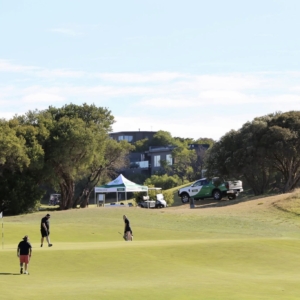
A golf course is only as good as the surface it presents. For superintendents and course managers, the challenge isn’t just growing grass — it’s delivering a consistent, high-quality playing surface across fairways, tees and surrounds, week after week, regardless of season, weather or foot traffic. That’s exactly where turf selection becomes a strategic decision rather than a simple procurement exercise.

At StrathAyr, we’ve built long-standing partnerships with some of Australia’s most respected golf facilities, and the reasons they continue to specify our turf come back to the same core priorities: consistency, recovery and playability under pressure.

Consistency That Builds Reputation

Golfers notice surface quality. Whether it’s the uniformity of a fairway lie, the firmness underfoot on a tee box, or the visual presentation that sets the tone before a single shot is played, consistency across the course matters. It shapes player experience, drives membership satisfaction, and ultimately protects a club’s reputation.

StrathAyr turf is grown under controlled, precision-managed conditions to deliver that uniformity from the moment it’s laid. Our production methods ensure each slab or roll meets tight specifications for density, root development and leaf quality, giving superintendents confidence that what arrives on site will perform to expectation from day one.

Recovery That Keeps Pace With Play

Golf courses endure relentless wear. High-traffic areas around tees, approaches and cart paths cop concentrated pressure across hundreds of rounds per week, and the turf in these zones needs to recover quickly to maintain surface integrity. Slow recovery leads to thinning, bare patches and inconsistent ball behaviour, all of which compromise the playing experience and increase maintenance costs.

The varieties we supply are selected specifically for their ability to recover under pressure. Strong lateral growth, deep root systems and proven wear tolerance mean turf bounces back faster between periods of heavy use, helping superintendents stay ahead of damage rather than constantly chasing it.

Playability Across Every Season

Seasonal transitions are one of the most difficult periods for any golf course. Winter dormancy, slow spring green-up and summer heat stress all present windows where surface quality can drop noticeably. For courses that operate year-round, maintaining playability through these transitions is essential to keeping members happy and tee sheets full.

StrathAyr’s turf range includes varieties with strong cool-season colour retention, faster transition performance and proven resilience under temperature extremes. This means fewer periods of compromised surface quality and less disruption to the playing calendar, which is a significant advantage for facilities that can’t afford to close or restrict access for extended periods.

A Turf Partner, Not Just a Supplier

Choosing the right turf is only part of the equation. How it’s established, maintained and managed over time determines whether that investment delivers long-term results. That’s why we work closely with superintendents and course managers well beyond the point of delivery, offering guidance on establishment protocols, seasonal management strategies and variety selection tailored to each facility’s unique conditions.

Whether you’re resurfacing fairways, upgrading tee complexes or addressing persistent problem areas, the conversation starts with understanding your course, your climate and your performance expectations.

Built for Courses That Demand More

Leading golf courses don’t settle for average turf, and they don’t settle for average service. At StrathAyr, we understand the standard these facilities operate at because we’ve been part of delivering it for years. Our turf is grown to perform where it matters most: under the scrutiny of players, members and management who expect nothing less than excellence. And we expect the same for ourselves.

If you’re planning a turf project or looking to improve surface performance across your course, we’d welcome the opportunity to discuss how StrathAyr can help. Get in touch with our team to start the conversation today.

March 5, 2026/by Belle Plunkett
https://strathayr.com/wp-content/uploads/2026/03/IMG_2347.jpeg 1365 2048 Belle Plunkett https://strathayr.com/wp-content/uploads/2025/10/StrathAyr-Logo-300x138.png Belle Plunkett2026-03-05 12:19:262026-04-01 11:35:06Why Leading Golf Courses Choose StrathAyr Turf: Consistency, Recovery and Playability Under Pressure

Guides on Installing Your Instant Lawn

  • Picture of RTF Tall Fescue GrassWatering Tips for Warm and Cool Season GrassesJune 7, 2025 - 6:24 pm
  • How heavy is a slab of natural turf?August 11, 2023 - 4:14 pm
  • VIDEO – LOOKING AFTER A NEW INSTANT LAWNMarch 8, 2019 - 6:38 am
  • VIDEO – SOIL PH LEVELS FOR A HEALTHY LAWNMarch 8, 2019 - 6:35 am
  • USING DOLOMITE LIME TO REDUCE SOIL ACIDITY FOR A HEALTHY LAWNMarch 8, 2019 - 6:31 am
  • Improving SoilIMPROVING SOIL STRUCTURE WITH GYPSUM FOR A LUSH LAWNMarch 8, 2019 - 6:17 am
  • Fresh turf in front gardenHOW TO LAY TURF PART 4: AFTERCAREMarch 8, 2019 - 6:10 am
  • Leaf blower blowing leavesAUTUMN LAWN CAREMarch 8, 2019 - 5:59 am
  • Fertiliser sprinkled on lawnCAN YOU OVER FERTILISE YOUR LAWN?March 8, 2019 - 5:53 am
  • Worm waste in grassGOT WORMS?March 8, 2019 - 5:44 am
Get a free quote
StratAyr Lawn Solutions

I’M READY TO BUY TURFCall 1800 622 455

Facebook Instagram Twitter LinkedIn YouTube

Privacy Policy Delivery Information Terms & Conditions

Scroll to top