
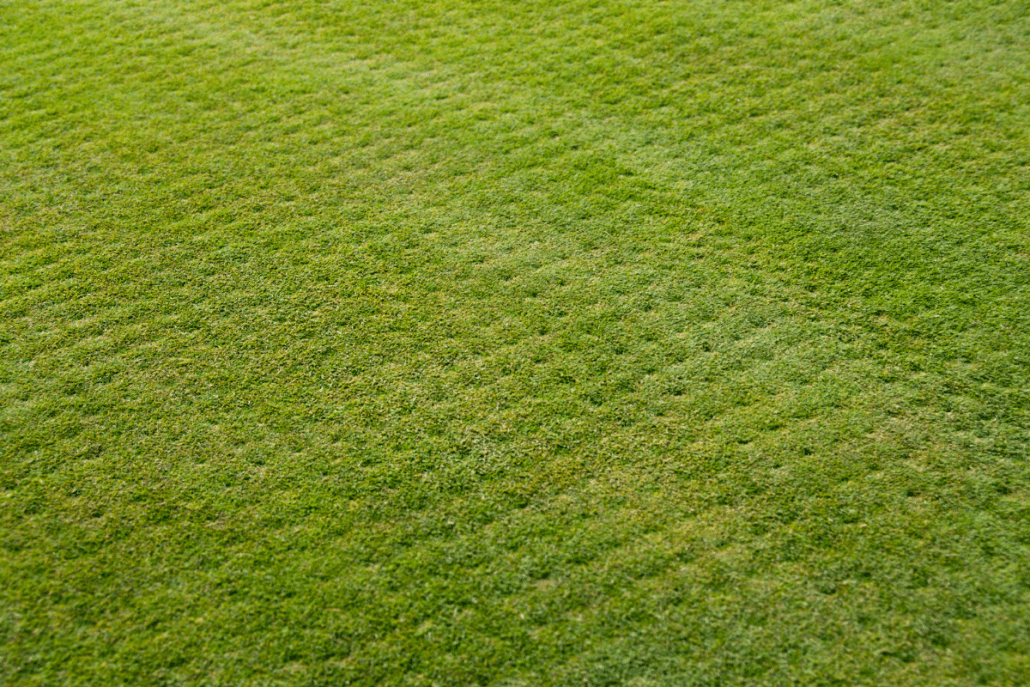
The temptation during winter is to do less, but mid-winter is a strategic window for sports turf aeration. Cooler temperatures, reduced growth rates, and lighter field use can make it feel like a safe time to ease off the maintenance schedule. But for turf managers serious about field performance come spring, mid-winter is actually one of the most strategic windows of the year, and aeration sits right at the heart of it.
Here’s why aerating your sports ground during the cooler months can set the foundation for everything that follows.
Compaction doesn’t take a winter break
High-use sports fields carry enormous compaction loads across the winter season. Football codes, rugby, and community sport all continue through the cooler months, and every boot, every tackle, and every piece of maintenance equipment adds to the compaction profile of your soil. Over time, that compaction restricts the movement of air, water, and nutrients through the soil profile, and a turf plant that can’t breathe or drink properly can’t recover, no matter how good your inputs are.
Mid-winter aeration directly addresses this. By opening up the soil profile while compaction is still accumulating, you’re breaking the cycle rather than waiting until the damage is done.
Root systems need oxygen year-round
It’s a common misconception that root activity slows to a standstill in winter. While growth rates drop, the root zone remains biologically active and still requires adequate gas exchange to function. Compacted soils trap carbon dioxide and deplete oxygen at the root level, stressing the plant even when surface conditions look acceptable.
Solid or hollow tine aeration during mid-winter restores that gas exchange, supporting root health through the coldest months and positioning the plant to respond aggressively when soil temperatures rise in spring. Fields that were aerated during winter consistently show faster, more uniform recovery than those that weren’t.
Water infiltration and drainage performance
Winter rainfall and irrigation runoff accumulate differently in a compacted soil. Instead of moving through the profile, water sits on or near the surface, creating the saturated, pugged playing surfaces that frustrate facility managers and put player safety at risk.
Aeration improves infiltration rates significantly, allowing surface water to move through the profile rather than pool. When combined with sand backfilling in hollow tine programmes, the effect is even more pronounced: you’re not just reopening existing channels, you’re building long-term drainage capacity into the profile itself. For councils and sporting clubs managing heavy winter fixture schedules, this translates directly to fewer unplayable days, more reliable field presentation, and less rolled ankles.
Setting up your fertiliser programme to actually work
Even the best fertiliser inputs are partially wasted on a compacted soil. Nutrients applied to a profile with poor infiltration either run off the surface or sit in the thatch layer, unable to reach the root zone where they’re needed. Aerating before or alongside your winter fertiliser application means your inputs have a direct pathway into the soil, improving uptake efficiency and reducing waste.
This is particularly relevant for programmes incorporating slow-release or granular products, where soil contact and moisture penetration are critical to activation.
Timing and method matter
Not all aeration is created equal, and the right approach depends on your field’s soil type, compaction depth, usage load, and the amount of recovery time available before the next fixture. Solid tines cause minimal surface disruption and suit fields that need to remain in play, while hollow tining removes a core of material and offers deeper remediation, which is ideal when there’s adequate recovery time scheduled.
Depth, spacing, and whether you’re backfilling with sand are all variables that should be tailored to the specific field and its performance goals. What works for a heavily trafficked community oval may not be appropriate for a regional stadium playing surface.
Don’t wait until the damage is visible
By the time compaction is obvious at the surface — pugging, surface cracking, poor drainage, slow recovery from wear — the soil profile has often been compromised for months. Mid-winter aeration is proactive maintenance, not reactive remediation. The fields that perform best in spring aren’t the ones that received the most product in September, but the ones that were managed correctly in June and July.
If you’re unsure where your fields sit right now, it’s worth getting a professional assessment before the back half of winter passes.
For general advice on maintenance and upkeep through winter at your sporting facility, get in touch with the StrathAyr team. We work alongside councils, sporting clubs, and venue managers across Australia to build maintenance programmes that ensure surfaces are perfected for play, all year round.