Get a FREE Quote - Call 1800 622 455
StrathAyr
  • Home
  • Grass Types
    • HELP ME CHOOSE
    • RTF Tall Fescue Turf
    • TifTuf Hybrid Bermuda
    • Sir Walter Buffalo Turf
    • Sir Grange Zoysia
    • Eureka Premium VG Kikuyu
    • Nullarbor Couch
  • Prepare
  • Shop
  • Commercial
    • Landscape Turf
    • Sports Turf
    • Turf for Cricket
    • Turf for Football
    • Turf for Soccer
  • Blog
  • Care
  • Case Studies
  • Contact
    • Contact
    • Community Sponsorship
    • Ballarat
    • Geelong
    • Mornington Peninsula
    • Shepparton
  • Free Quote
  • Search
  • Menu Menu
  • 0Shopping Cart

Understanding Winter Dormancy and Frost: What It Means for Your Turf

Blog

When the cooler months arrive, warm-season grasses do exactly what they’re designed to do. Growth slows, colour softens, and the lawn enters a period of rest. For anyone managing turf professionally, whether that’s a council open space team, a sportsground coordinator, or a trade operator with a client list to look after, this is well-understood territory, but for homeowners, this can be a little scary! Winter dormancy is not a sign that something has gone wrong; instead, it is a natural, predictable phase in the annual cycle of warm-season grasses, and knowing what to expect makes it straightforward to manage.

Winter Dormancy: The Grass Is Resting, Not Retreating

Warm-season varieties like TifTuf Hybrid Bermuda and Sir Walter DNA Certified Buffalo are genetically tuned to slow down when soil temperatures drop. Colour transitions from a deep green to a golden or straw-like hue, and active shoot growth pauses. This is the grass conserving energy and directing its resources below the surface, protecting the root system and preparing for a strong return in spring, in time for the backyard games to recommence.

There is nothing to remedy here. The turf is not struggling; it is doing precisely what healthy warm-season grass does. Dormancy actually plays a role in long-term turf health, giving the plant a period of reduced metabolic demand before the demands of a full growing season kick back in. Come the warmer months, a well-maintained warm-season lawn that has moved through dormancy cleanly will green up and grow away with good vigour. Think of it as a holiday for the lawn!

The practical implication for facility managers and contractors is simply to adjust your maintenance programme accordingly. Mowing frequency naturally reduces because of slowed growth, irrigation requirements drop, and fertiliser inputs should be wound back during dormancy to avoid unnecessary stress on a plant that is not actively growing. Keep traffic management in mind too, as dormant turf has a reduced capacity to recover from wear compared to an actively growing surface. For homeowners, the same rules tend to apply. Mow and water a little less, and keep the kids off the grass if you’ve just experienced a frost or heavy downpour. You’ll avoid muddy feet inside this way, too!

Frost: What It Does and How to Reduce the Damage

Frost presents a different set of considerations. While dormancy is a managed expectation, frost can cause real damage if the turf is caught in a vulnerable state or if certain practices are applied at the wrong time.

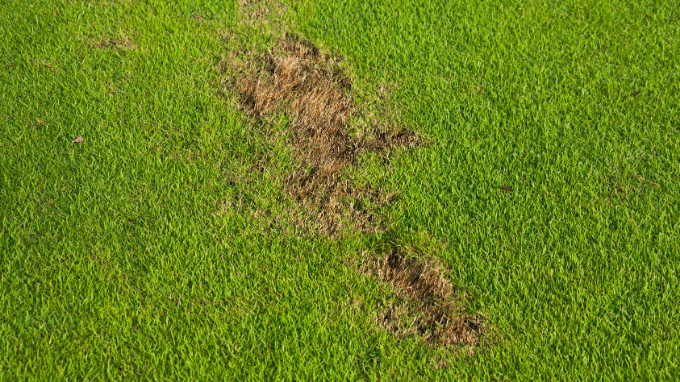
When frost forms on a turf surface, ice crystals develop within the leaf tissue. The damage occurs not from the frost itself sitting on the leaf, but from that tissue being disturbed while still frozen. Foot traffic across a frosted surface is one of the more common causes of frost damage, with the physical pressure rupturing cell walls and leaving behind that characteristic pattern of browning or blackened leaf marks. The rule is simple: keep traffic off frosted turf until the surface has fully thawed and the leaf tissue has had a chance to recover. This applies equally to mowing, which should never be done on a frosted surface.

Watering ahead of a forecast frost event is worth considering in some circumstances. A light irrigation in the early evening can help moderate the temperature at the soil surface, offering some protection to the crown of the plant, which is the part that matters most for recovery. The crown sitting close to the soil is where the plant’s regrowth potential lives, and protecting it through a frost period is the priority.

Where frost events are frequent or severe, site-specific factors come into play. Low-lying areas, shaded zones, and poorly drained surfaces tend to frost harder and recover more slowly. Understanding these microclimates on a facility allows for proactive management, whether that means modified traffic plans, strategic irrigation scheduling, or simply setting expectations around recovery timelines for affected areas.

Post-frost, resist the urge to intervene too aggressively. Brown leaf tissue following a frost event does not necessarily mean the plant is lost. Allow the surface to thaw fully and give the turf time before making any assessment about recovery. In most cases, once temperatures lift and soil warmth returns, well-established turf will grow through the damage without lasting impact.

If you’re a backyard turf enthusiast, we suggest a similar approach. Keep active feet and pets off frosty lawn until it has a chance to thaw out. We also recommend lifting your mowing height a little, as that extra length in the blade allows the grass to soak up what extra sunlight in can.

RTF Tall Fescue: For When Winter Green Is Non-Negotiable

Some homeowners don’t like the thought of their turf taking its annual break, and that’s fine too! Looking out onto a green backyard on a gloomy day is pretty special, and that’s where RTF Tall Fescue comes into play. As a cool-season grass, RTF operates on a different seasonal rhythm entirely. While warm-season varieties are resting through winter, RTF won’t lose its colour, producing dense, active turf through the coolest months of the year and holding its colour and structure through frost events that would send a warm-season surface into dormancy.

RTF has been specifically bred for performance across a wide range of conditions, and its deep root architecture sets it apart from standard fescue varieties. Those roots drive genuine drought tolerance for a cool-season grass, making it a practical option even in climates where summers can stress a less capable variety. It has earned its stellar reputation because it keeps its beautiful, deep green colour and remains soft underfoot through Victoria’s coldest season.

StrathAyr supplies RTF Tall Fescue alongside our full range of warm-season varieties, grown under the same standards that have underpinned our operation for more than 20 years.

If you’re after general winter maintenance advice or help with variety selection, get in touch with the team at StrathAyr today.
May 27, 2026/by Belle Plunkett
https://strathayr.com/wp-content/uploads/2025/10/StrathAyr-Logo-300x138.png 0 0 Belle Plunkett https://strathayr.com/wp-content/uploads/2025/10/StrathAyr-Logo-300x138.png Belle Plunkett2026-05-27 06:47:132026-05-27 06:47:13Understanding Winter Dormancy and Frost: What It Means for Your Turf

Why Mid-Winter Aeration Could Be the Most Important Thing You Do for Your Sports Fields This Season

Blog, Residential, Uncategorized

The temptation during winter is to do less, but mid-winter is a strategic window for sports turf aeration. Cooler temperatures, reduced growth rates, and lighter field use can make it feel like a safe time to ease off the maintenance schedule. But for turf managers serious about field performance come spring, mid-winter is actually one of the most strategic windows of the year, and aeration sits right at the heart of it.

Here’s why aerating your sports ground during the cooler months can set the foundation for everything that follows.

Compaction doesn’t take a winter break

High-use sports fields carry enormous compaction loads across the winter season. Football codes, rugby, and community sport all continue through the cooler months, and every boot, every tackle, and every piece of maintenance equipment adds to the compaction profile of your soil. Over time, that compaction restricts the movement of air, water, and nutrients through the soil profile, and a turf plant that can’t breathe or drink properly can’t recover, no matter how good your inputs are.

Mid-winter aeration directly addresses this. By opening up the soil profile while compaction is still accumulating, you’re breaking the cycle rather than waiting until the damage is done.

Root systems need oxygen year-round

It’s a common misconception that root activity slows to a standstill in winter. While growth rates drop, the root zone remains biologically active and still requires adequate gas exchange to function. Compacted soils trap carbon dioxide and deplete oxygen at the root level, stressing the plant even when surface conditions look acceptable.

Solid or hollow tine aeration during mid-winter restores that gas exchange, supporting root health through the coldest months and positioning the plant to respond aggressively when soil temperatures rise in spring. Fields that were aerated during winter consistently show faster, more uniform recovery than those that weren’t.

Water infiltration and drainage performance

Winter rainfall and irrigation runoff accumulate differently in a compacted soil. Instead of moving through the profile, water sits on or near the surface, creating the saturated, pugged playing surfaces that frustrate facility managers and put player safety at risk.

Aeration improves infiltration rates significantly, allowing surface water to move through the profile rather than pool. When combined with sand backfilling in hollow tine programmes, the effect is even more pronounced: you’re not just reopening existing channels, you’re building long-term drainage capacity into the profile itself. For councils and sporting clubs managing heavy winter fixture schedules, this translates directly to fewer unplayable days, more reliable field presentation, and less rolled ankles.

Setting up your fertiliser programme to actually work

Even the best fertiliser inputs are partially wasted on a compacted soil. Nutrients applied to a profile with poor infiltration either run off the surface or sit in the thatch layer, unable to reach the root zone where they’re needed. Aerating before or alongside your winter fertiliser application means your inputs have a direct pathway into the soil, improving uptake efficiency and reducing waste.

This is particularly relevant for programmes incorporating slow-release or granular products, where soil contact and moisture penetration are critical to activation.

Timing and method matter

Not all aeration is created equal, and the right approach depends on your field’s soil type, compaction depth, usage load, and the amount of recovery time available before the next fixture. Solid tines cause minimal surface disruption and suit fields that need to remain in play, while hollow tining removes a core of material and offers deeper remediation, which is ideal when there’s adequate recovery time scheduled.

Depth, spacing, and whether you’re backfilling with sand are all variables that should be tailored to the specific field and its performance goals. What works for a heavily trafficked community oval may not be appropriate for a regional stadium playing surface.

Don’t wait until the damage is visible

By the time compaction is obvious at the surface — pugging, surface cracking, poor drainage, slow recovery from wear — the soil profile has often been compromised for months. Mid-winter aeration is proactive maintenance, not reactive remediation. The fields that perform best in spring aren’t the ones that received the most product in September, but the ones that were managed correctly in June and July.

If you’re unsure where your fields sit right now, it’s worth getting a professional assessment before the back half of winter passes.

For general advice on maintenance and upkeep through winter at your sporting facility, get in touch with the StrathAyr team. We work alongside councils, sporting clubs, and venue managers across Australia to build maintenance programmes that ensure surfaces are perfected for play, all year round.

May 20, 2026/by Belle Plunkett
https://strathayr.com/wp-content/uploads/2025/10/StrathAyr-Logo-300x138.png 0 0 Belle Plunkett https://strathayr.com/wp-content/uploads/2025/10/StrathAyr-Logo-300x138.png Belle Plunkett2026-05-20 07:30:092026-05-21 11:15:34Why Mid-Winter Aeration Could Be the Most Important Thing You Do for Your Sports Fields This Season

Winter Weed Management: Your Playbook

Blog, Residential

The cooler months have arrived across Victoria, and while your lawn shifts into a lower gear, the competition doesn’t stop. Winter grass, bindii, clover and a whole lineup of opportunistic weeds are already reading the conditions and looking for their opening. They will find it in any lawn that isn’t prepared, and if they do, you will spend spring chasing a result you should have locked in during autumn.

This is your pre-season window. What you do between now and the start of June truly determines whether your lawn comes out of winter in front, or comes out behind and spends the better part of spring trying to make up lost ground. The margin between those two outcomes is narrower than most people expect, and it almost always comes down to preparation timing. Luckily for you, StrathAyr is here to take the guesswork out of it.

Why winter weeds are a structural problem, not just an aesthetic one

It’s easy to treat weeds as a cosmetic issue — something unsightly that can be dealt with when the weather warms and the motivation returns. But weeds aren’t just a visual problem. Every weed that establishes over winter is actively competing with your lawn for water, nutrients and light at exactly the point when your turf has the least capacity to fight back.

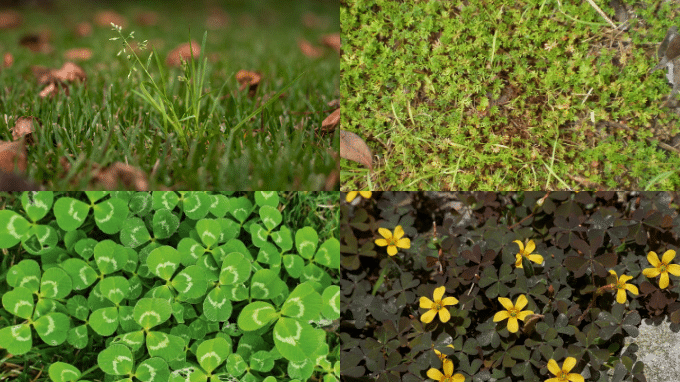
Cool-season weeds like winter grass are particularly aggressive because they thrive in the same conditions that slow your lawn down. While your desirable turf variety reduces its growth rate and draws back resources, winter grass is doing the opposite. As the name suggests, it’s hitting its most productive period. Left unchecked, a winter grass population that looks manageable in June can look genuinely damaging by August, and by the time spring rolls around, you’re not reviving a lawn, you’re reclaiming one.

Broadleaf weeds like bindii and clover follow a similar pattern. They establish quietly during the cooler months, spread laterally while your lawn isn’t in a position to crowd them out, and become a nuisance well before most people think to address them. The time to act on these weeds is before they’re visible, not after.

The pre-emergent advantage

The most effective weed management strategy isn’t reactive. It’s preventive. Once winter grass has germinated, you’re already behind. You’ve moved from managing a potential problem to managing an existing one, and that’s a harder and more expensive place to be.

Pre-emergent herbicides work by targeting weed seeds during the germination window, before they’ve had the chance to establish above the soil. The critical trigger point for winter grass germination is soil temperature, specifically when it drops to around 14°C. That window is getting close, and in the southern parts of the state, it arrives earlier than people expect. Acting before that threshold is crossed is the difference between shutting the competition down before they get started and spending the season in a rearguard action.

Oxafert is the pre-season input we recommend for this job. It combines a pre-emergent herbicide with a controlled-release fertiliser, which means it handles two critical tasks in a single application. It blocks the germination of winter grass and other weed seeds while simultaneously delivering the nutritional foundation your lawn needs to maintain condition through the cold months. There’s no doubling up on applications, no juggling two separate programmes and no wasted effort. One well-timed application does the structural work that sets your lawn up for the entire winter period.

A well-conditioned lawn is its own best defence

Pre-emergent herbicide is part of the picture, but it’s not the whole story. A lawn that enters winter in strong condition is inherently more resistant to weed pressure than one that’s already thin, stressed or undernourished. Dense, healthy turf is one of the most effective weed barriers available because it simply doesn’t give opportunistic species the space to establish. Weeds don’t just arrive out of nowhere; they move into weak spots, and a lawn that doesn’t have weak spots doesn’t give them anywhere to go.

Maintaining that density through winter requires keeping your lawn’s nutritional programme running, even as growth slows. This is where a lot of lawn management falls short. It’s tempting to pull back on inputs during the cooler months and let the lawn tick along on its own, but the nutritional deficit that builds up over winter is exactly what creates the vulnerability weeds exploit. A lawn that’s been properly fed heading into and through the cold months comes out the other side with tight coverage and strong root development, giving it the kind of structural integrity that crowds out competition without needing a reactive intervention later.

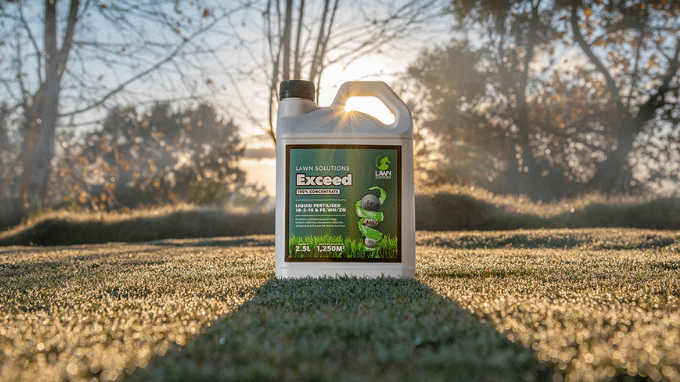
Exceed Liquid Fertiliser is the input we use to keep lawns in that kind of competitive condition. It delivers balanced, fast-acting nutrition that supports strong growth and tight sward density through the season. Think of it as the conditioning work that keeps the whole squad performing when conditions are at their toughest. It’s not a quick fix, it’s the consistent maintenance that means your lawn doesn’t develop the gaps that weeds are waiting to exploit.

Your winter weed game plan

The programme doesn’t need to be complicated. Get Oxafert down now, while soil temperatures still allow effective pre-emergent uptake, and you block the first wave before it even starts. Keep Exceed in the rotation to maintain the thick, healthy coverage that does the ongoing defensive work for you all season long. Two inputs, applied with the right timing, and you’ve taken the most important steps most lawns will ever need for winter weed management.

Both Oxafert and Exceed Liquid Fertiliser are available to purchase through the team at StrathAyr. Give us a call to discuss your requirements and get your order in before the soil temperature window closes.

Preparation beats reaction, every time

Consistent, well-timed preparation beats reactive treatment every time. It’s the reality that every sports turf manager and backyard enthusiast works to, and that performance lawn management is built around. The lawns that come out of winter in the best shape aren’t the ones that got lucky. They’re the ones that were managed with intent, with the right inputs applied at the right time, and with a clear understanding of what the season demands. A little extra care now will pay dividends come September!

If you want to talk through the right approach for your surface this winter, the StrathAyr team is ready to help. We work with performance turf day in, day out, and we bring that same standard to every conversation we have about lawn management. Get in touch with the team to put a plan together before the season gets away from you.

May 11, 2026/by Belle Plunkett
https://strathayr.com/wp-content/uploads/2026/05/Winter-Weed-Featured-Image.png 800 1200 Belle Plunkett https://strathayr.com/wp-content/uploads/2025/10/StrathAyr-Logo-300x138.png Belle Plunkett2026-05-11 10:37:402026-05-11 13:06:58Winter Weed Management: Your Playbook

Reducing Winter Downtime on Community Sports Fields

Blog, Residential

Winter presents a familiar challenge for councils and sports field managers: reduced turf growth, higher wear pressure, and limited recovery time between matches. Without proactive planning, fields can quickly deteriorate, leading to closures, cancelled fixtures, and increased rehabilitation costs. Not the legacy many sporting grounds want to leave!

The good news is that with the right preparation and turf management strategies, winter downtime can be significantly reduced, and StrathAyr are here to help with that.

Start With Autumn Preparation

Strong winter performance begins well before temperatures drop. Autumn is the ideal time to repair worn or bare areas, improve soil structure and drainage, and apply fertiliser to build root strength and carbohydrate reserves. Fields that enter winter in good condition are far more resilient to traffic and cold stress than those already under pressure. It might seem early, but now is a great time to get ahead and be prepared for what winter may bring.

Choose Turf That Performs Year-Round

Not all turf varieties respond the same way in winter. Selecting a variety with proven cool-season performance or strong transition capability can make a major difference to surface stability and recovery. For high-use community ovals, turf that offers better colour retention, reduced dormancy, and faster recovery once conditions improve can help keep fields playable for longer and significantly reduce closure periods.

This is where Eureka Premium Kikuyu is truly a cut above the rest. Known for being the surface of choice across winter sporting codes, its aggressive lateral growth and impressive ability to recover make it the go-to choice for grounds that cop a hammering during peak season. With the power to repair divots and scuff marks within days, and the ability to maintain colour and density when other varieties are starting to struggle, Eureka Premium has become the no-brainer for many sporting fields across the state.

Focus on Drainage and Surface Stability

Waterlogged fields are one of the biggest contributors to winter downtime. Poor drainage increases compaction, surface damage, and player safety risks. Plus, nobody likes getting wet socks in the middle of a footy match! Addressing low spots and uneven surfaces, improving sub-surface drainage where possible, and aerating to reduce compaction and improve infiltration are all key considerations. Even small drainage improvements can have a noticeable impact during wet winter periods.

Manage Wear Proactively

Winter recovery is slow, so managing wear becomes critical. Councils can extend field usability by rotating goal mouths and high-traffic areas, limiting training loads during peak wet periods, and using temporary rest zones or alternative surfaces where available. These measures reduce concentrated damage and help preserve turf cover through the season. While this may not be ideal, it will help to ensure the field is match-ready, all season.

Plan Repairs Early

Waiting until spring to address winter damage often leads to longer recovery times and higher costs. Scheduling repair works as soon as conditions allow helps fields return to play faster and more consistently, and having turf supply and remediation plans in place before winter begins allows you to act quickly when windows of opportunity arise. This is where StrathAyr can become a valuable member of your squad. Getting in touch with our knowledgeable team during autumn to assist with the development of winter management and maintenance plans can be the difference between a season spent on the field or on the sidelines. We know where you’d rather be.

Keep Your Fields in Play

Reducing winter downtime isn’t about one single solution; it’s about preparation, turf selection, and proactive management. At StrathAyr, we work closely with councils and sports field managers to help keep community facilities open, safe, and resilient year-round.

If you’d like tailored advice on turf selection or winter field preparation, simply reach out to the team.

Because we care about your legacy. Game on.

May 7, 2026/by Belle Plunkett
https://strathayr.com/wp-content/uploads/2026/05/Community-oval.png 800 1200 Belle Plunkett https://strathayr.com/wp-content/uploads/2025/10/StrathAyr-Logo-300x138.png Belle Plunkett2026-05-07 08:26:592026-05-07 13:07:43Reducing Winter Downtime on Community Sports Fields

Guides on Installing Your Instant Lawn

  • Picture of RTF Tall Fescue GrassWatering Tips for Warm and Cool Season GrassesJune 7, 2025 - 6:24 pm
  • How heavy is a slab of natural turf?August 11, 2023 - 4:14 pm
  • VIDEO – LOOKING AFTER A NEW INSTANT LAWNMarch 8, 2019 - 6:38 am
  • VIDEO – SOIL PH LEVELS FOR A HEALTHY LAWNMarch 8, 2019 - 6:35 am
  • USING DOLOMITE LIME TO REDUCE SOIL ACIDITY FOR A HEALTHY LAWNMarch 8, 2019 - 6:31 am
  • Improving SoilIMPROVING SOIL STRUCTURE WITH GYPSUM FOR A LUSH LAWNMarch 8, 2019 - 6:17 am
  • Fresh turf in front gardenHOW TO LAY TURF PART 4: AFTERCAREMarch 8, 2019 - 6:10 am
  • Leaf blower blowing leavesAUTUMN LAWN CAREMarch 8, 2019 - 5:59 am
  • Fertiliser sprinkled on lawnCAN YOU OVER FERTILISE YOUR LAWN?March 8, 2019 - 5:53 am
  • Worm waste in grassGOT WORMS?March 8, 2019 - 5:44 am
Get a free quote
StratAyr Lawn Solutions

I’M READY TO BUY TURFCall 1800 622 455

Facebook Instagram Twitter LinkedIn YouTube

88 Ekberg Rd, Seymour VIC 3661

Privacy Policy Delivery Information Terms & Conditions

Scroll to top