
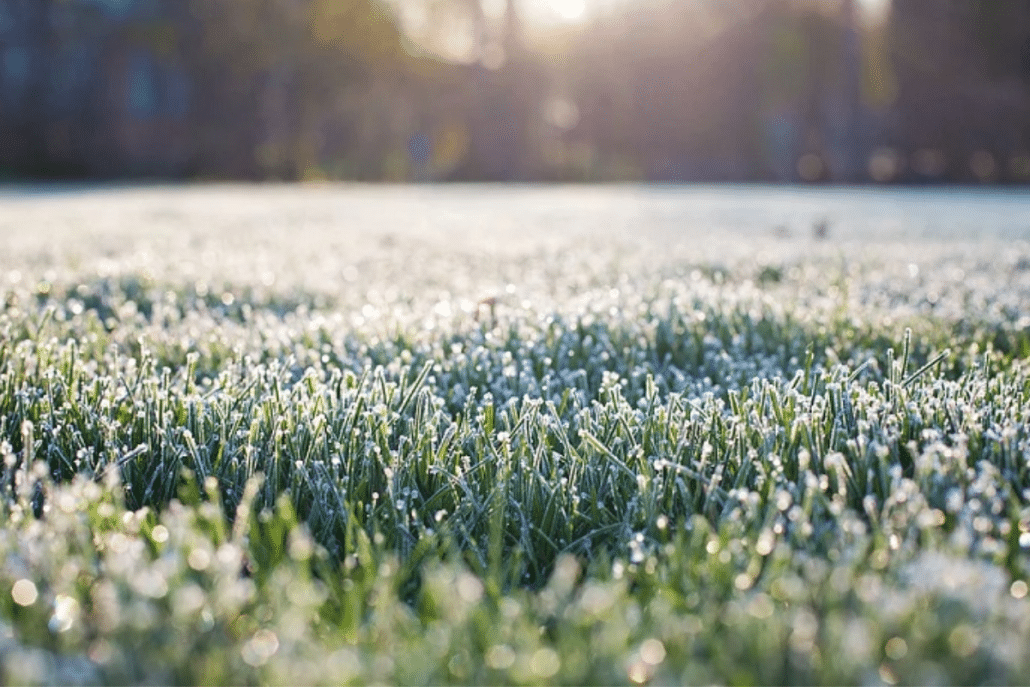
When the cooler months arrive, warm-season grasses do exactly what they’re designed to do. Growth slows, colour softens, and the lawn enters a period of rest. For anyone managing turf professionally, whether that’s a council open space team, a sportsground coordinator, or a trade operator with a client list to look after, this is well-understood territory, but for homeowners, this can be a little scary! Winter dormancy is not a sign that something has gone wrong; instead, it is a natural, predictable phase in the annual cycle of warm-season grasses, and knowing what to expect makes it straightforward to manage.
Winter Dormancy: The Grass Is Resting, Not Retreating
Warm-season varieties like TifTuf Hybrid Bermuda and Sir Walter DNA Certified Buffalo are genetically tuned to slow down when soil temperatures drop. Colour transitions from a deep green to a golden or straw-like hue, and active shoot growth pauses. This is the grass conserving energy and directing its resources below the surface, protecting the root system and preparing for a strong return in spring, in time for the backyard games to recommence.
There is nothing to remedy here. The turf is not struggling; it is doing precisely what healthy warm-season grass does. Dormancy actually plays a role in long-term turf health, giving the plant a period of reduced metabolic demand before the demands of a full growing season kick back in. Come the warmer months, a well-maintained warm-season lawn that has moved through dormancy cleanly will green up and grow away with good vigour. Think of it as a holiday for the lawn!
The practical implication for facility managers and contractors is simply to adjust your maintenance programme accordingly. Mowing frequency naturally reduces because of slowed growth, irrigation requirements drop, and fertiliser inputs should be wound back during dormancy to avoid unnecessary stress on a plant that is not actively growing. Keep traffic management in mind too, as dormant turf has a reduced capacity to recover from wear compared to an actively growing surface. For homeowners, the same rules tend to apply. Mow and water a little less, and keep the kids off the grass if you’ve just experienced a frost or heavy downpour. You’ll avoid muddy feet inside this way, too!
Frost: What It Does and How to Reduce the Damage
Frost presents a different set of considerations. While dormancy is a managed expectation, frost can cause real damage if the turf is caught in a vulnerable state or if certain practices are applied at the wrong time.
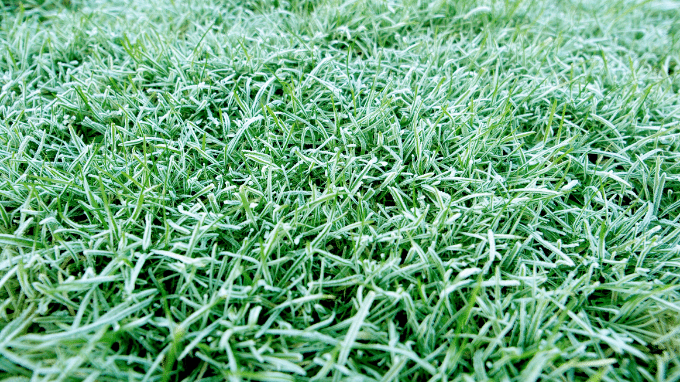
When frost forms on a turf surface, ice crystals develop within the leaf tissue. The damage occurs not from the frost itself sitting on the leaf, but from that tissue being disturbed while still frozen. Foot traffic across a frosted surface is one of the more common causes of frost damage, with the physical pressure rupturing cell walls and leaving behind that characteristic pattern of browning or blackened leaf marks. The rule is simple: keep traffic off frosted turf until the surface has fully thawed and the leaf tissue has had a chance to recover. This applies equally to mowing, which should never be done on a frosted surface.
Watering ahead of a forecast frost event is worth considering in some circumstances. A light irrigation in the early evening can help moderate the temperature at the soil surface, offering some protection to the crown of the plant, which is the part that matters most for recovery. The crown sitting close to the soil is where the plant’s regrowth potential lives, and protecting it through a frost period is the priority.
Where frost events are frequent or severe, site-specific factors come into play. Low-lying areas, shaded zones, and poorly drained surfaces tend to frost harder and recover more slowly. Understanding these microclimates on a facility allows for proactive management, whether that means modified traffic plans, strategic irrigation scheduling, or simply setting expectations around recovery timelines for affected areas.
Post-frost, resist the urge to intervene too aggressively. Brown leaf tissue following a frost event does not necessarily mean the plant is lost. Allow the surface to thaw fully and give the turf time before making any assessment about recovery. In most cases, once temperatures lift and soil warmth returns, well-established turf will grow through the damage without lasting impact.
If you’re a backyard turf enthusiast, we suggest a similar approach. Keep active feet and pets off frosty lawn until it has a chance to thaw out. We also recommend lifting your mowing height a little, as that extra length in the blade allows the grass to soak up what extra sunlight in can.
RTF Tall Fescue: For When Winter Green Is Non-Negotiable
Some homeowners don’t like the thought of their turf taking its annual break, and that’s fine too! Looking out onto a green backyard on a gloomy day is pretty special, and that’s where RTF Tall Fescue comes into play. As a cool-season grass, RTF operates on a different seasonal rhythm entirely. While warm-season varieties are resting through winter, RTF won’t lose its colour, producing dense, active turf through the coolest months of the year and holding its colour and structure through frost events that would send a warm-season surface into dormancy.
RTF has been specifically bred for performance across a wide range of conditions, and its deep root architecture sets it apart from standard fescue varieties. Those roots drive genuine drought tolerance for a cool-season grass, making it a practical option even in climates where summers can stress a less capable variety. It has earned its stellar reputation because it keeps its beautiful, deep green colour and remains soft underfoot through Victoria’s coldest season.
StrathAyr supplies RTF Tall Fescue alongside our full range of warm-season varieties, grown under the same standards that have underpinned our operation for more than 20 years.
If you’re after general winter maintenance advice or help with variety selection, get in touch with the team at StrathAyr today.